How to keep Aquarium Water Cool
Hi guys, my name is Jatin, and this blog on how to keep your aquarium cool, is something very important that every aquarium hobbyist, whether he or she is a planted aquarium hobbyist like me or someone who keeps bare-bottom tanks, needs to know.
I started my Aquarium hobby after moving to Jaipur, Rajasthan, in 2024 from Delhi.
My first tank was a Planted, 20–25-liter plastic container, which gave me a boost that, yes, plants can grow in an aquarium.
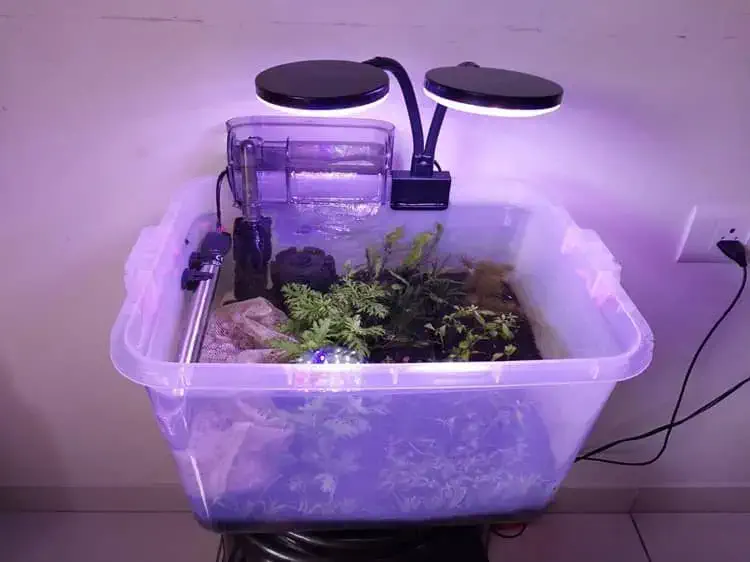
Later, I made a one and a half feet, 10-gallon tank (18 x 12 x 12 inch) and a one feet cube, which was around 22–25 liters.
When I started the hobby, people mostly told me to install a heater, which I did as it was October 2024.
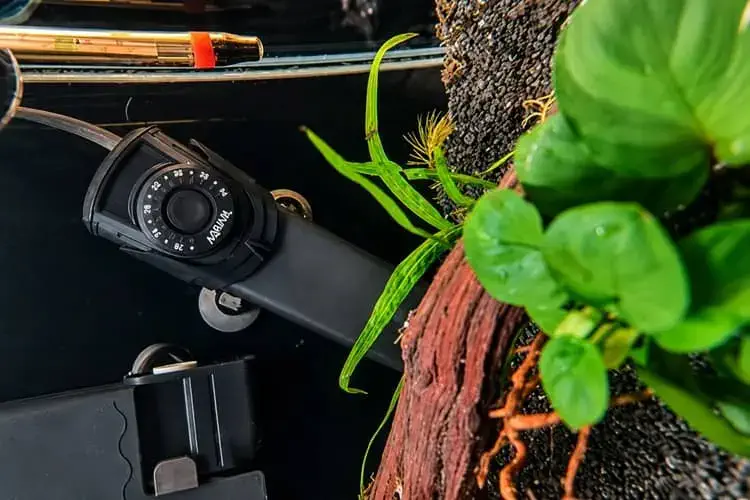
In both my 10 gallon, one and a half feet tank and my 22-liter, one-feet tank, I installed a heater. But by April, it was clear to me that heater was not required as even room temperature was touching 26-27 degree celsius, so I removed the aquarium heater.
In same month I also bought a small aquarium digital temperature meter.
Yes, I was a bit worried because Jaipur’s summer can reach 45 to 51 degrees Celsius outside.
So, I started reading a bit more about how to keep an aquarium cool, but honestly, it was not very helpful.
On 11th April 2025, I went to Delhi for a month because my father was undergoing a knee operation.
During that time, I started a three feet planted tank at my office in Jaipur, where my partner son’s were very happy & I could keep all my fish there, which I had in my two tanks at home.
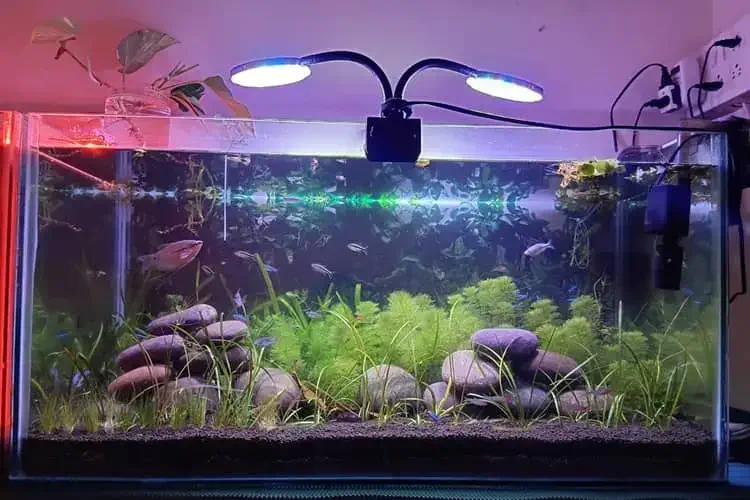
But when I returned to Jaipur in May’25, both of my tanks at home, which didn’t have any fish at that time, had lost almost 90% of their plants.
They all melted.
Most of the plants had completely melted. The only plants that survived were Sagittaria and Anubias. That’s it.
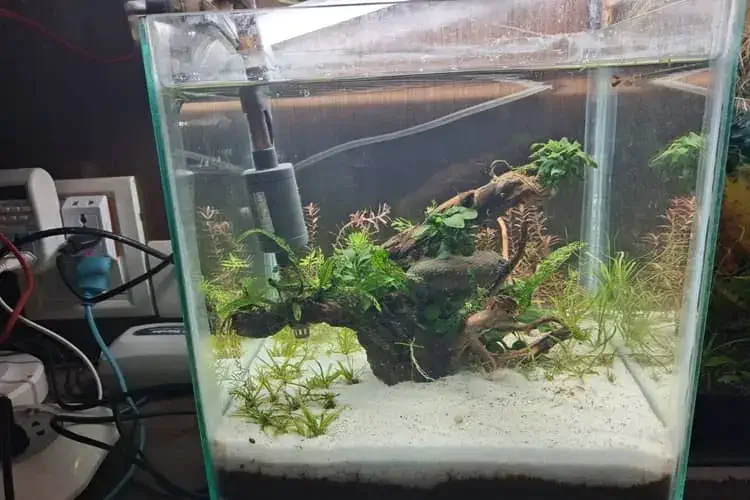
My digital aquarium temperature meter, showed that my tank temperature was around 32-33 degrees Celsius.
Thank God I didn’t have any fish in those tanks.
The next day, when I went to my office, I found that even the three feet tank had lost almost half of plants. But not all of them, because I mostly had Vallisneria & big sagittaria in that tank.
The temperature there was around 30-31 degrees Celsius.
This proved one thing to me:
The bigger the tank & the greater the water volume, will have more stable temperature, then a 20-40 liter tank,
The fish in my office tank were fine, but 31 degrees Celsius was definitely not the ideal temperature for fish like neon tetras & my Paradise Gourami, and surprisingly my Paradise Gourami, grew almost 50% bigger in just two months.
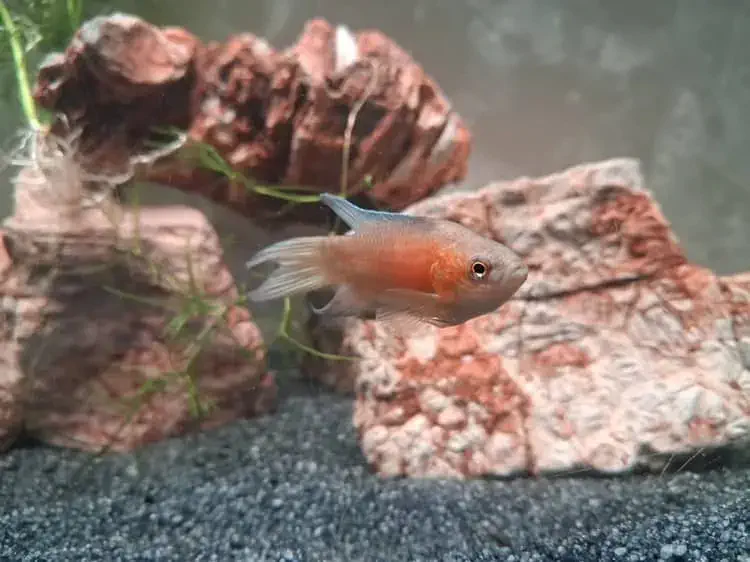
The temperature requirement for Paradise Gourami is around 20–25 degrees Celsius, so I knew I needed to do something about the temperature.
I immediately bought aquarium fans, and the temperature of my three feet tank immediately came down to around 27 degrees celsius from 31-32 degree celsius.
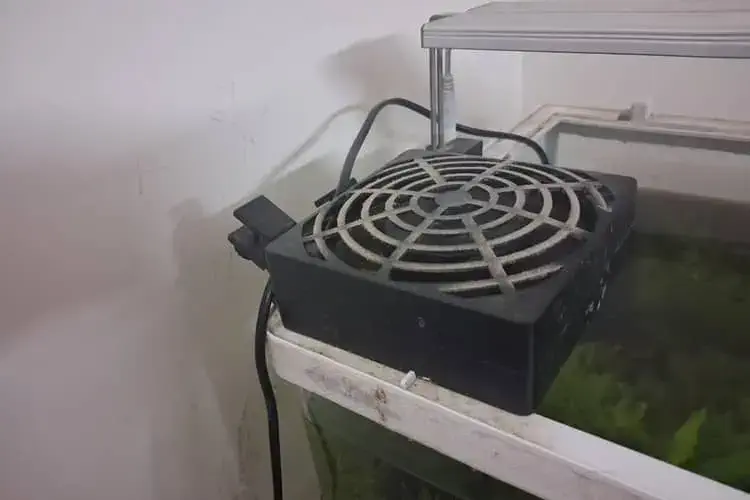
At home, I retired my one feet tank, bought another 10-gallon tank, installed two aquarium fans, and was able to maintain the temperature at around 28 degrees celsius in both tanks.
I rescaped both tanks, which was again a very fun experience for me. This time, I went for dirted tanks instead of aquasoil.
Later, after around 3 months, both tanks were thriving, with healthy plants and fish.
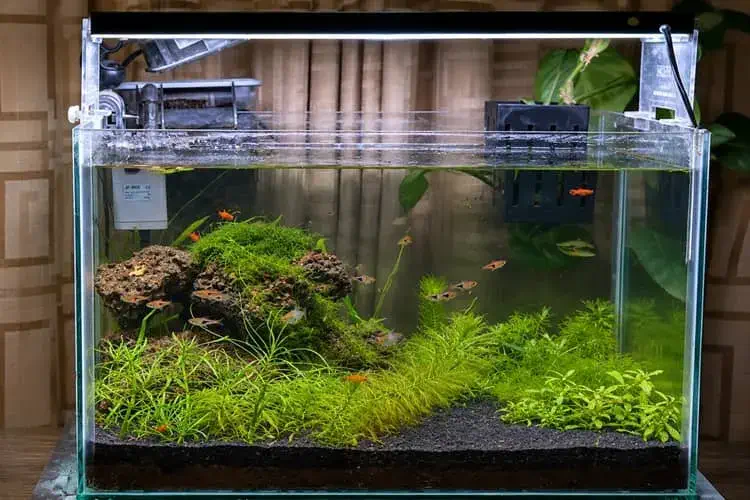
That also gave me some profit because I eventually sold both these tanks.
By that time, I wanted to move towards a three feet tank for home too.
So, that’s the story of what I learned during the summers of 2024 and 2025.
Now, in the summer of 2026, from April to September, I was easily able to maintain a temperature of around 27 to 29 degrees Celsius in my one feet cube.
Plus in my 2 feet planted tank with a height of 17 inches, and 2.5 feet × 1 feet × 16 inch-high planted aquariums, temperature is 26 to 28 degree celsius, as water volume here is 80-90 luter per tank, same theory, higher the water, more stable is the temperature.
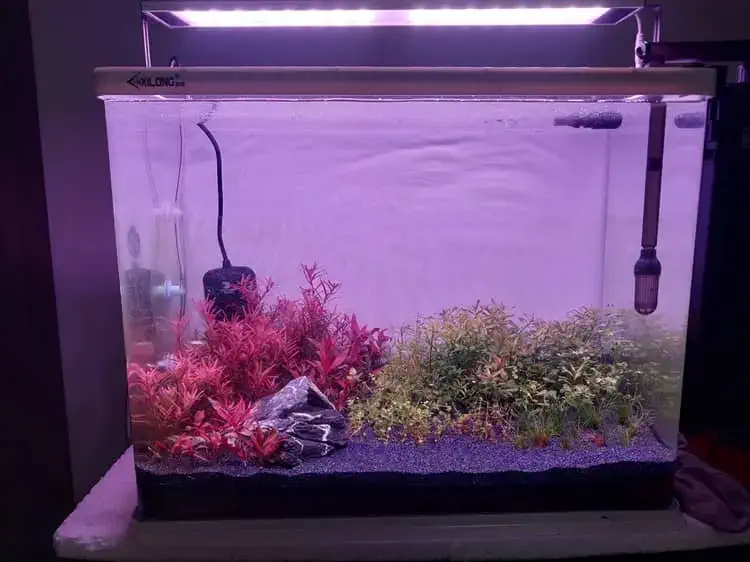
All these tanks have good-quality aquarium fans. However, I personally would not suggest buying expensive aquarium fans.
In our local Jaipur planted aquarium WhatsApp group, a hobbyist named Doctor Azeem Khan ji from Pratap Nagar, Jaipur made a DIY aquarium fan using a large computer fan.
The fan itself costs around ₹ 70, and he is more than happy to make one or a dozen for me and the local Jaipur group at same price. I will share his video in this post.
So, in this post below, I am going to tell you the easiest way to maintain your aquarium temperature around 26–28 degrees Celsius using just aquarium fans and water top ups, without the need to purchase an aquarium chiller.
Aquarium Chiller
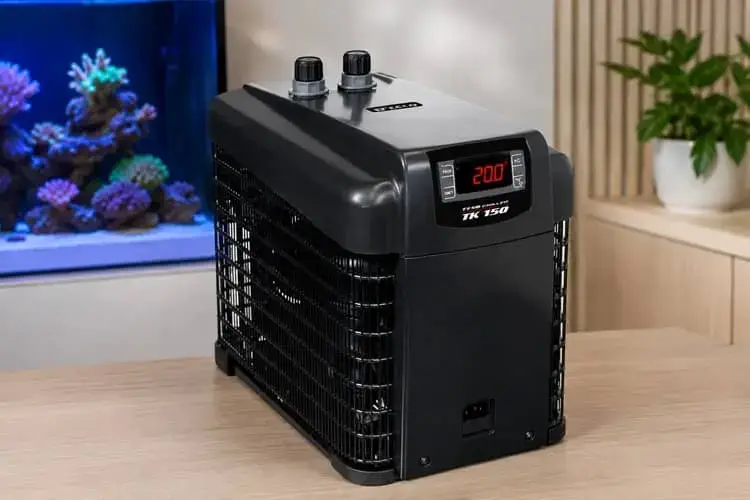
I call Aquarium chillers, the hobby killer as not, or most can afford a good quality Aquarium chillers of company liek Techni, which starts from Rs 40,000 per peice,
Aquarium chillers are often promoted as the best way to keep an aquarium cold.
But in my experience, you don’t necessarily need to spend that kind of money (Rs 20-60 thousand), especially if your main problem is summer heat.
And one more thing: never simply add ice directly to your aquarium.
I have never personally tried the ice method.
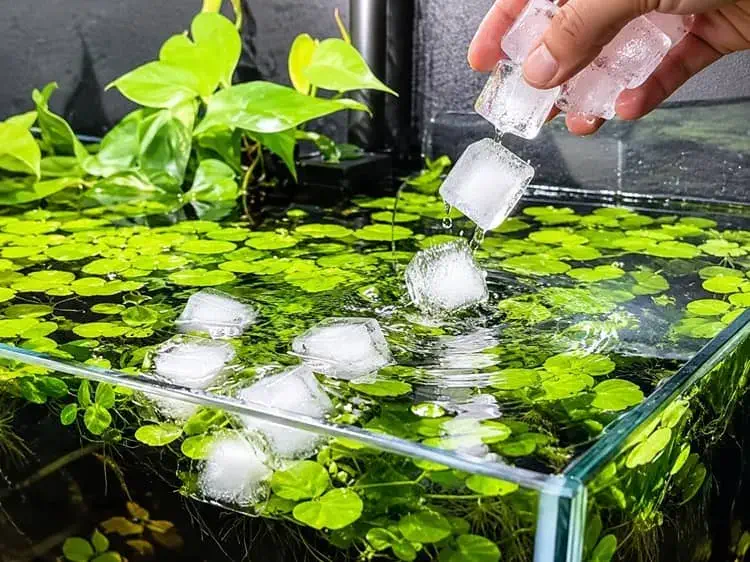
A lot of my friends have tried it, and, according to my experience with them, the biggest mistake of adding ice directly into the a small tank, which will cause a sudden temperature change & potentially kill your fish.
Now, I am not saying that cooling water with ice is completely impossible.
Many hobbiyst do use ice in certain situations.
But you need to understand that controlling the temperature with ice needs good experience.
Guys, I am living in Jaipur, where the summer months can have the outside temperature of 48–52 degrees Celsius.
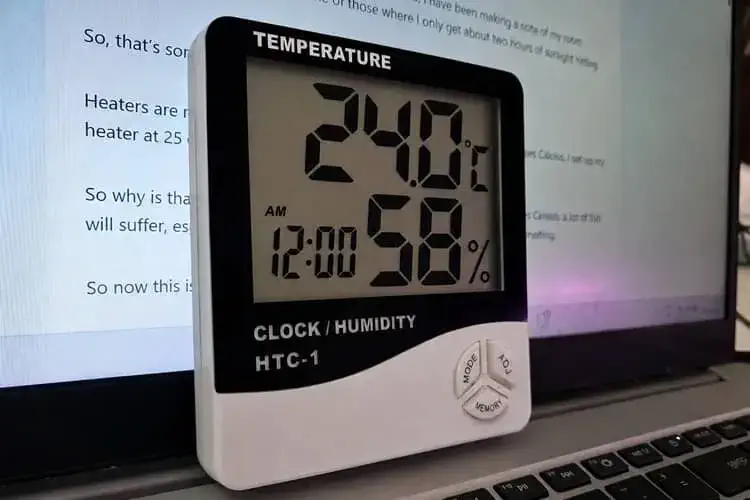
So, in 2026, I started keeping a note of my room temperature, and here is the result.
| Month | Room Temperature in Celsius | Aquarium Temperature in Celsius |
| April | 28 degree | 25 degree |
| May | 30.5 degree | 26 degree |
| June | 33.5 degree | 26 degree |
| July | 31.5 degree | 27 degree |
| August | 31 degree | 28 degree |
| September | 29.5 degree | 27 degree |
My room gets only around one hour of sunlight, from 2 to 3 pm., and none of my tanks are near a balcony or a wall that receives direct sunlight.
Tank placement matters.
And now, in October, I have finally removed the aquarium fans because even at room temperature, my tank temperature is around 27–28 degrees Celsius and tank temperature is 26-27 degree Celsius..
So, let’s start and see how you can keep your aquarium cool, even if you are living in a city where the outside temperature can reach 45–51 degrees Celsius.
1. Keep the Aquarium Away from Sunlight
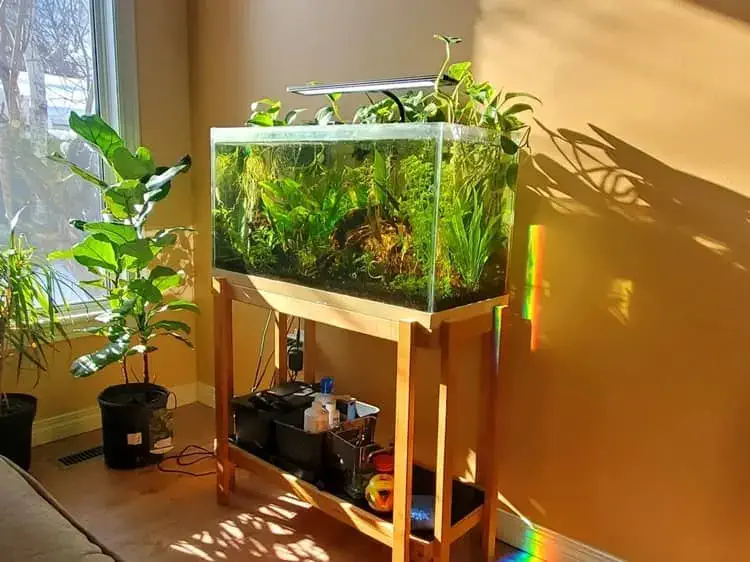
The first important point when installing any aquarium equipment is to keep your tank away from direct sunlight, especially from March to November.
You should also avoid placing your aquarium against walls that receive direct sunlight in your room.
For example, in my room, the southwest-facing wall receives direct sunlight from noon to evening, though for me only two hours a day as there are 2 building there, and all four of my aquariums at home are currently placed in the northeast and east directions.
So, just make sure your aquarium does not receive direct sunlight.
Now, I am not saying that sunlight is bad for aquariums.
I know a lot of people who like to grow plants using indirect sunlight, but they are experienced hobbyists & sellers who know what they are doing.
However, if your goal is to maintain a temperature between 24°C and 28°C naturally during summer, follow this 1st step.
2. Your Best Weapon: Aquarium Fans or Any Small Fan
When I say aquarium fans, simply search for them on Amazon or other websites, such as Aquazones.in, aquarium fans are not cheap.
They start at around ₹ 500 and can cost up to ₹ 2,000.
I have personally bought three fans from their website, ranging from ₹750 to ₹1,500.
However, people in my local hobby groups have now shared some DIY ideas that cost less than ₹100.
So, I am planning to set 5 and 5 foot front planted aquariums in 2027, and all of them will have there multiple DIY fans.
How do Aquarium Fans really reduce Aquarium temperature?
The Science of Evaporation.
The concept is simple.
During April, May, and June, when summer is at its peak, humidity levels in Jaipur are generally between 35% and 45%. I personally live in Jaipur, so I can share my own experience.
During these months, the outside temperature can reach 48°C to 50°C. In my city (Jaipur), it can even touch 51°C or 52°C, while the room temperature stays around 32°C to 34°C.
However, humidity levels remain very low.
Aquarium fans blow air across the surface of the water. The movement & ripples created on the water’s surface increase evaporation, which helps lower the aquarium temperature.
In my 2 feet planted tank, for example, around five litres of water evaporate daily.
I was refilling my tank with approximately two to three litres of water every day.
Thanks to this evaporation, which is more effective in low-humidity conditions, aquarium fans can reduce the temperature from 32°C–34°C to around 26°C.
That is a drop of 6°C, which is quite impressive, especially when the humidity is between 35% and 45%.
Now, let’s talk about July and August.
You can even include September in this category, as humidity levels rise to around 55%–75% during the monsoon season.
Now the outside temperature drops from the summer highs to around 39°C–41°C from 48.
Now because humidity is higher, evaporation slows down.
So, even when my room temperature is around 31°C, aquarium fans may only reduce the water temperature by 2°C to 3°C.
You can install a second fan, but it may only provide an additional reduction of around 0.5°C to 1°C, depending on your setup and room conditions.
Therefore, during the monsoon months or other periods of high humidity, even if you can maintain your aquarium temperature at 28°C or 29°C, that is a good result for smaller tanks.
Finally, as the monsoon season starts to withdraw in September, the outside temperature in Jaipur can come down to around 32°C–35°C, with humidity levels somewhere between 50% and 60%.
With an aquarium fan, you can often achieve temperatures of 27°C–28°C in larger tanks and 28°C–29°C in smaller tanks.
My experience shows that if you keep your aquariums away from direct sunlight and walls that receive direct sunlight, you can achieve a temperature reduction of around 2°C to 6°C with aquarium fans and maintain water temperatures of approximately 26°C–29°C under suitable conditions.
The only catch is that you need to refill the evaporated water regularly.
Also, if you are using RO water (like me), you do not need to add minerals to the replacement water just because of evaporation. Evaporation removes water but leaves most dissolved minerals behind.
If you are using tap water and do not need to add extra minerals, you can top up your aquarium with tap water.
However, make sure you use a suitable chlorine remover before adding tap water. This is not necessary if your replacement RO water is already free of chlorine and chloramine.
3. Air Pumps Also Reduce Aquarium Temperature
If I don’t mention the importance of air pumps in a blog about reducing aquarium temperature, that would be wrong.
Air pumps can also help reduce aquarium temperature, around 1°C to 2°C, depending on the weather conditions in your city or village.
I have many friends, fellow hobbyists in cities like Bangalore and Trivandrum, where the weather is mostly tropical for most of the year.
They use aquarium fans and sometimes obly air pumps, and according to their experience, air pumps help them maintain aquarium temperatures below 30°C.
The science is simple.
Air pumps create a lot of movement on the water’s surface by continuously releasing bubbles.
They also improve oxygen exchange in your aquarium, although this is not directly responsible for lowering the temperature.
The continuous movement of water created by air pumps increases evaporation.
While the cooling effect may not be as strong as that of aquarium fans, a temperature reduction of around 1°C to 2°C is possible in tropical parts of India under suitable conditions.
4. Aquarium Chillers
I first learned about aquarium chillers from Mr. Mayur Dev of Aquarium Productions India.
He created a dedicated video on aquarium chillers, which I found interesting.
He also shared that one of the first companies to develop aquarium chillers was TECO, an Italian company.
An aquarium chiller is an amazing piece of equipment, without a doubt.
It can bring your aquarium temperature down to even 20°C–22°C, even when your room temperature is around 35°C, provided the chiller is appropriately sized for your aquarium.
However, I personally know very few hobbyists who can afford a chiller.
Perhaps only 1 in 50 of the hobbyists I know can make that investment.
Even if I had to maintain just one large aquarium, there is a chance that I might invest in a chiller, like only 2%.
But a good-quality chiller from a company like TECO can cost ₹ 40,000 or more.
Nowadays, Chinese chillers like Hailea are also available in India, with prices ranging from approximately ₹ 15,000 to ₹ 40,000.
In my opinion, you should consider a chiller only if you cannot maintain your aquarium temperature below 30°C using aquarium fans and air pumps.
In India, I believe that with the right combination of aquarium fans, air pumps, and proper aquarium placement, hobbyists in most locations can maintain temperatures below 30°C without investing in a chiller.
I even know a hobbyist from Jaisalmer who maintains aquarium temperatures of around 29°C using aquarium fans.
However, if you are reading this blog from outside India and genuinely cannot maintain a suitable aquarium temperature using these methods, investing in a chiller is worth considering. TECO is one of the established brands you can explore.
Now, since I have never personally used an aquarium chiller, I cannot share much from my own experience with this equipment.
I have shared all the tips and tricks I know from my own experience and from fellow hobbyists.
If you have any other useful ideas, please share them in the comments section. Our WhatsApp group is always interested in learning new things and exchanging experiences.
Alternatively, you can join our group by clicking on the WhatsApp link below.