Best Plants for Aquarium in 2026
So if you have an aquarium and you want to add plants to it, congratulations, you are making your first planted aquarium.
In this blog post, I am sharing my two years of experience, where I have tried more than 50+ aquarium plants in 20 of my planted aquariums.
I have created aquariums with aqua soil, dirted tanks, the Walstad method, Father Fish method and some even without soil, just sand or gravel.
In this post, I am sharing all the aquarium plants which I personally think, if you are a beginner, you should try.
If you are an expert, you can also grow these plants and have the best versions of them, with CO2 & Liquid Fertilizers.
Things You Should Have Before Setting Up a Planted Aquarium
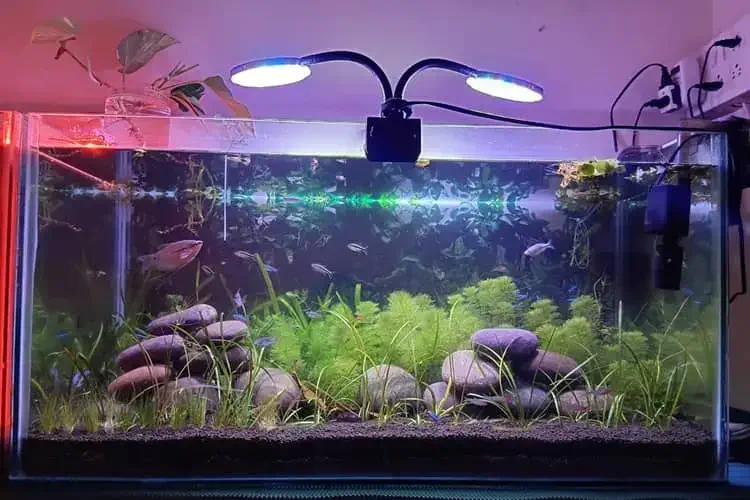
So it’s clear that you have an aquarium, a glass box. That’s nice. Now what do you need?
I will categorize my suggested aquarium plants into three categories:
- 1st, medium low-tech
- 2nd, medium-difficult plants; and
- 3rd, high-tech plants.
Low-tech plants are those which you can grow with just a basic setup. You can grow them with a very small amount of soil, or sometimes even with no soil. Just fish poop is more than enough.
Medium-tech plants are those for which you need to have a good substrate system, whether it’s aqua soil or a dirted tank, which I personally use.
And high-tech plants are those which, I personally suggest, one can grow in dirted tanks, but it takes a lot of effort because they melt a lot. If you can use aqua soil and other things like CO2 and liquid fertilizer, you can grow them much better.
So by the end of this post, you will have a complete list of the best aquarium plants, which you can grow as per your substrate idea. Or if you just want to grow plants in gravel, there are also those plants which you can simply paste or attach to a rock. I will consider those under low-tech plants.
A Few More Things You Need Before Setting Up a Planted Aquarium
So, a few more things before I share the plant list.
For plants, you need an aquarium LED light.
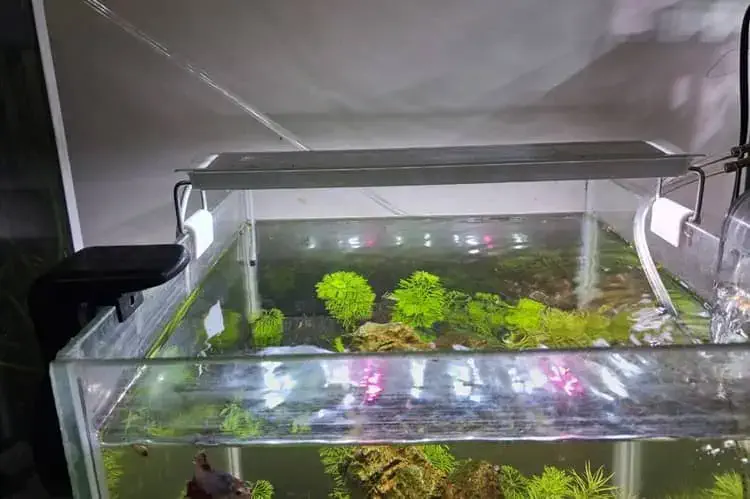
Now, what is this? Even low-tech plants need some sort of light for photosynthesis.
So, let’s say you are creating a two feet planted aquarium tank. I would suggest you have at least a minimum of 15 to 20 watts of LED light, so that you can have good growth for low to medium tech plants.
And if you are going with the third option, which is high-tech plants, at that stage, you need moderate to high intensity WRGB lights.
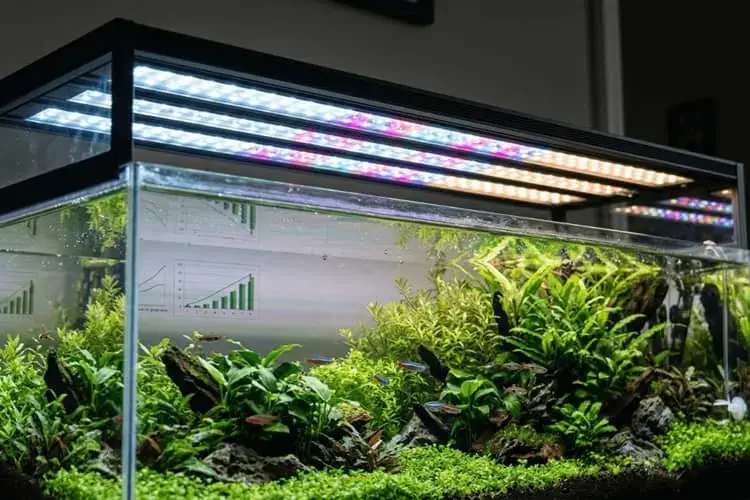
Next, you need an aquarium fan and a heater.
Why an aquarium fan? I personally live in Jaipur, and from April to September, the room temperature here is somewhere between 27 to 32 degrees Celsius.
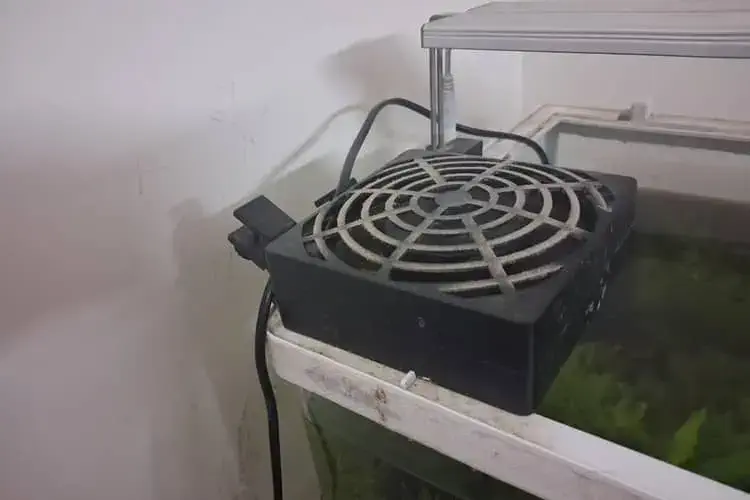
You have to understand that if your aquarium temperature is above 30 degrees Celsius, the chances are high that a lot of plants will melt.
So, I install an aquarium fan, which during the dry season, like April, May, and June, reduces my tank temperature from 32 to around 26–27 degrees Celsius.
And in July, August, and September, when it’s the rainy season, my room temperature is around 27–28 degrees Celsius.
Even at that time, the aquarium fan reduces the temperature by one to two degrees because whenever there is moisture in the air, aquarium fans don’t perform that well.
But still, in all these six months, from April to September, I am easily able to maintain my aquarium temperature between 25 to 27 degrees Celsius.
The third thing you need is an Aquarium Heater. Yes, that’s right—especially in winters.
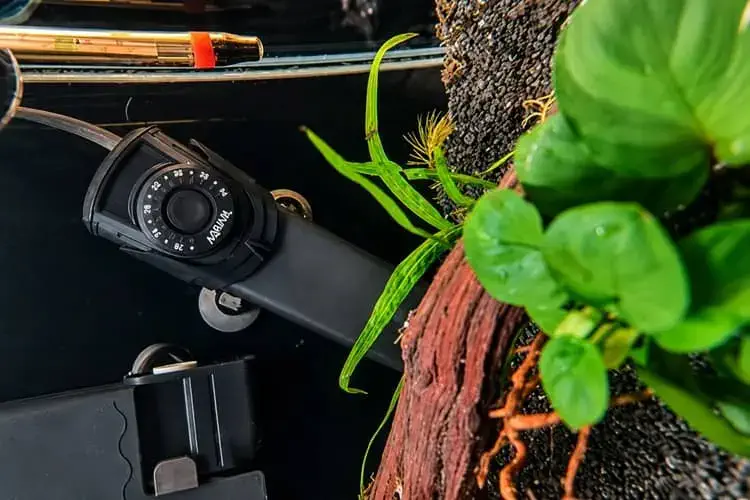
Now, if you’re living in states like Kerala, Karnataka, or somewhere where you don’t have much of a winter, you may not need a heater, or you may only need one to maintain a proper temperature.
But even in Jaipur, in winters, the room temperature goes somewhere around 12 to 13 degrees Celsius.
How do I know that? Because in the last two years, I have been making a note of my room temperature, and my room is one of those where I only get about two hours of sunlight hitting the lobby.
So, that’s something you need to know.
Heaters are required whenever the room temperature goes below 24 degrees Celsius. I set up my heater at 25 degrees Celsius.

So why is that? Because if the aquarium temperature goes below 18 degrees Celsius, a lot of fish will suffer, especially tropical fish, and some plants, if not all, may also start melting.
So now this is clear. Now let’s start with the low-tech plants list.
My Top 10 Favorite Low-Tech Aquarium Plants
I have a list of more than 10 plants, and I am still trying new ones, but here is a list of my top 10 best plants for aquarium, planted aquariums. These are plants which you can buy and get 90 to 99 percent growth with the right basic conditions.
1. Limnophila sessiliflora / Ambulia
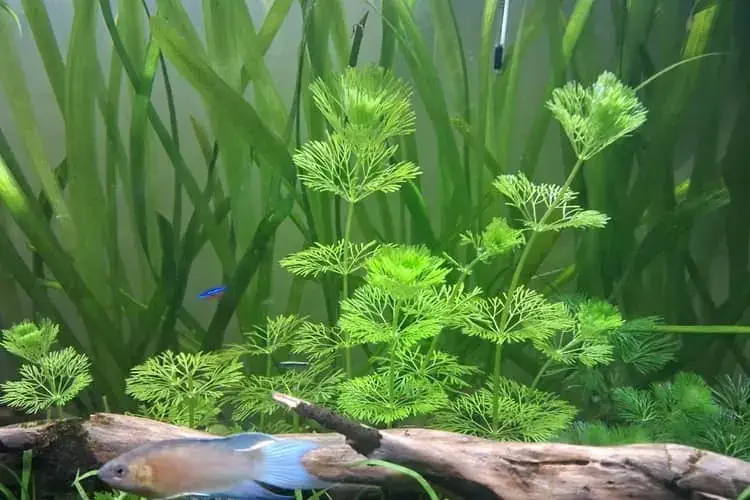
The first plant, which is always in my tank, along with a few others mentioned below, is Limnophila sessiliflora.
The origin of this plant is from India, Sri Lanka, ASEAN Countries, so more like South & South East Asia.
It grows pretty well in a temperature range of 20 to 28 degrees Celsius and it’s a stem plant.
What do I mean by a stem plant?
Let’s say you got five stems of Limnophila sessiliflora, which are five inches long. You can simply cut them in half, making each stem around 2.5 inches long. Take a tweezer, pick up the stem with the tweezer, and add it to your substrate, 1.5 inches deep.
Note: This plant can grow without soil, but it is best to give it at least some amount of dirted soil, even a cheaper one.
Now every 15 days, these stems can almost double in size. So now you have 10 stems, let’s say nine stems—which are around five feet long.
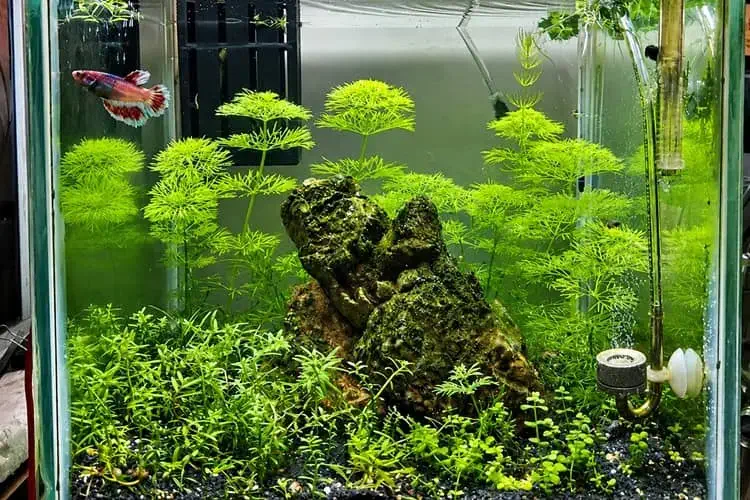
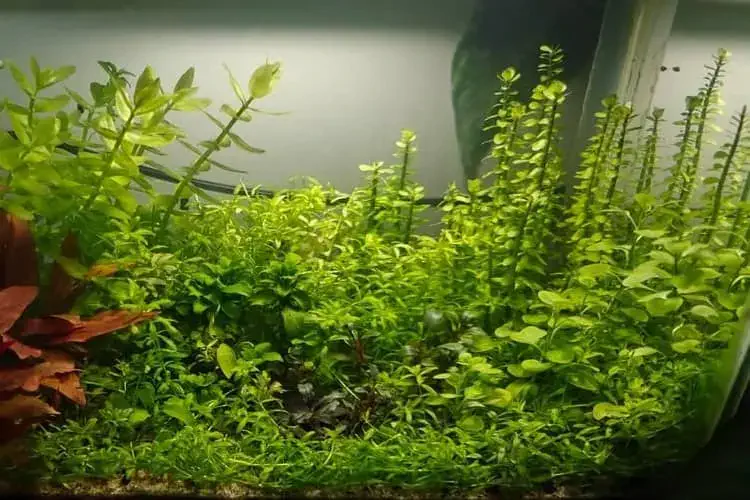
See below image of my 1 feet Betta Cube Tank, all Limnophila sessiliflora here is cutting from just 1 plant.
Wait another 15 days, and after a month, these stems can easily be around nine to ten inches long.
If you have a 12 inch high tank, cut around 70 percent of them from the bottom and plant them again. This way, you can keep propagating the plant.
Limnophila sessiliflora is a plant I personally have not bought for more than one year, but still I have it in all mu planted tanks, and given them to my friends in Jaipur—I think to more than 10 people—and even after that, it is still available in all of my tanks, as you can see in the picture.
2. Vallisneria
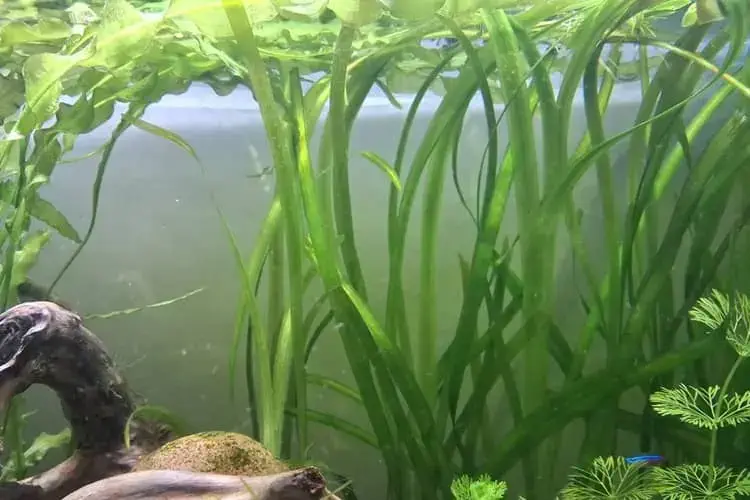
Now, Vallisneria is not a stem plant; it is a rosette plant.
So, what is a rosette plant?
It means you don’t grow it by cutting it in half. You cannot propagate or get more plants simply by cutting the plant.
When you add it to the substrate, this plant can easily grow without soil. You just need river sand or 4-5 mm gravel, or sometimes a mixture of both, and simply add Vallisneria in them. Even fish poop can do wonders for Vallisneria growth, and low to moderate light.
There are many varieties of Vallisneria, such as
- Vallisneria gigantea
- Vallisneria twister
- Vallisneria tiger, &
- Vallisneria nana. All of them are amazing.
I personally like Vallisneria gigantea and Vallisneria nana.
Right now, in my tanks, I added 10 rosettes, or 10 pieces, of Vallisneria gigantea in my latest 2.5 feet tank. It has not even been a month, and I can easily count 15 to 16 of them.
One reason is that I am using CO2, but even if I was not using CO2, from 10 plants, within a month, you can easily get 13 to 14 plants.
So, how does this plant create a second plant?
This plant shoots a runner. See image below from my 2..5 feet planted tank.
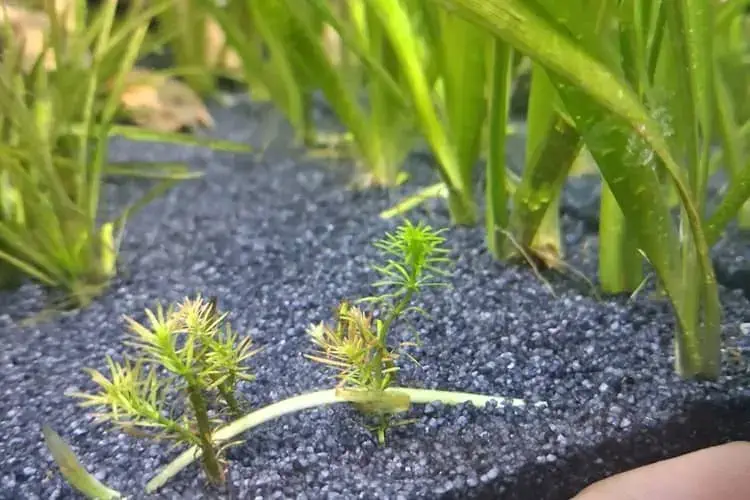
From the bottom, or the crown part of the plant, a strong runner will shoot out, dig itself into the substrate, like 1-2 inch away, and from there, a new plant will grow.
So, Vallisneria creates new plants through runners.
Abserve above at this picture from my latest 2.5-feet tank, which is full of Vallisneria.
3. Water Sprite
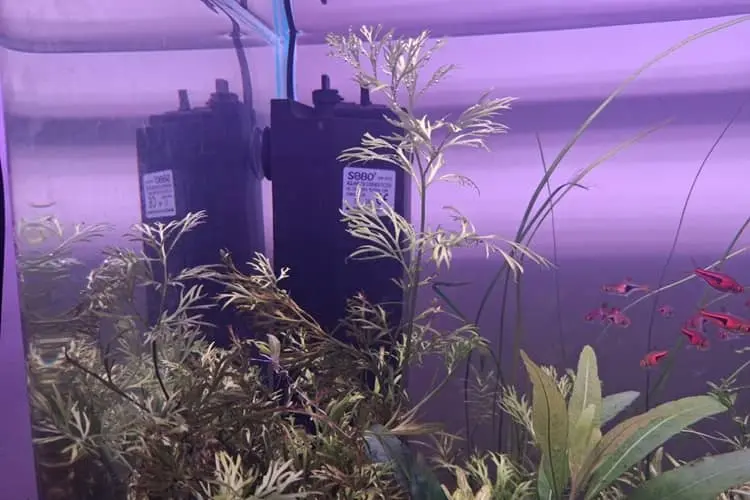
Water Sprite is a plant that you can easily grow with soil and without soil.
Most of the time, when this plant comes to me, it is grown outside the water.
Note: The majority of plants we buy from our vendors are grown outside the water. This is called emersed growth. But when you add them to the water, new growth comes out, which is actually more beautiful. This is called submerged growth.
Water Sprite is one more plant which I basically use or suggest to my friends if they are having a high nitrate problem.
Nitrate is a byproduct of ammonia, which, to some extent, is fine for fish, but it is also food for plants.
So, if you just float Water Sprite on top of your aquarium, you will start seeing new shoots coming out of the water.
I personally get four or five plants in emersed growth and then cut them from the stems, add them to the middle of the aquarium, and spread out the plant, especially when I want a jungle-style look.
Within a matter of 20-30 days, I see a lot of new growth in this plant.
It is also very good for a community tank where you need dense plants where fish can hide if they are stressed.
4. Sagittaria
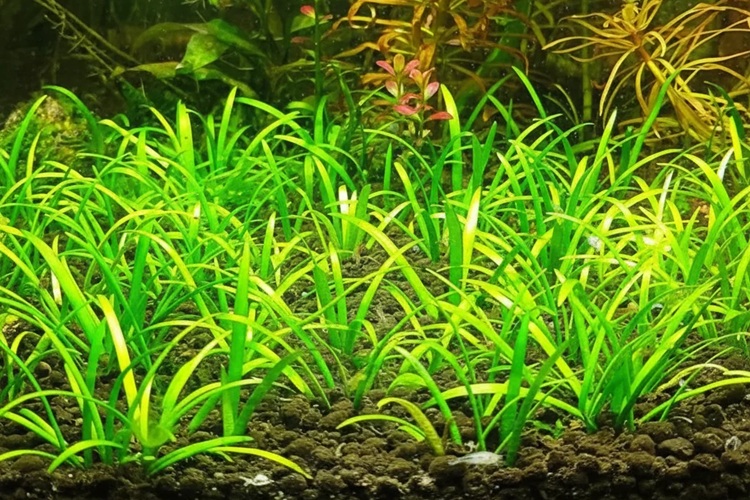
Now, Sagittaria plants also come in a lot of varieties, with three being the most popular:
- Dwarf Sagittaria
- Sagittaria Needle Leaf
- Sagittaria Giant
Sagittaria is very similar to Vallisneria. You just need to add it to the soil substrate.
Note: It can be grown without soil, but it really multiplies when you have some sort of soil. Still, you can grow it without soil.
For Sagittaria, I personally suggest Dwarf Sagittaria, which I use as a carpet plant for low-tech planted aquariums.
For example, you have a one feet cube aquarium. You just buy six of them, add them to the front, let’s say with around one-two inches of space between them, and give them low to moderate light.
It may take some time—easily around two months, as its emersed leaves will melt, and new submerged leaves will start growing. Within a matter of two months, those six plants can become 15 or even more.
Dwarf Sagittaria only grows around one to two inches, Sagittaria Needle Leaf is a slightly bigger plant, something around three to four inches, while Sagittaria Giant is not as tall as Vallisneria, but it can grow up to five to six inches.
The temperature range for Sagittaria is actually very wide. I think you can easily grow it between 18 to 32 degrees Celsius.
5. Epiphyte Plants
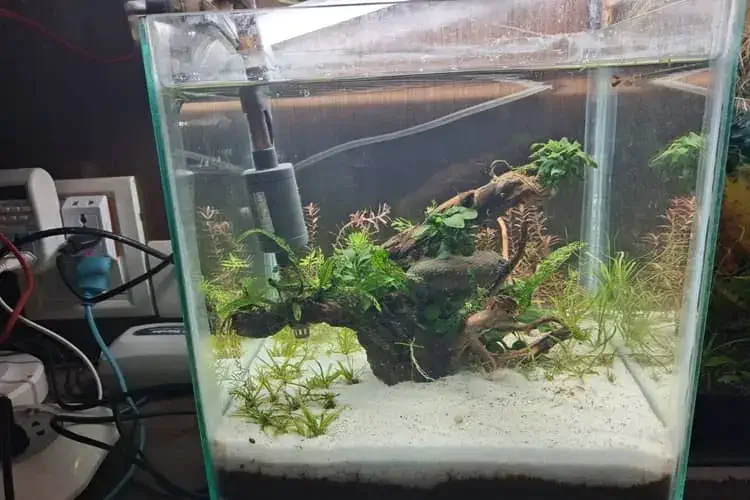
Now, when I say epiphyte plants, I mean a lot of varieties of plants which do not need soil or even sand. In fact, there is no need to bury them in sand because they can die.
They are all easy to grow. They take some time to produce new leaves, but they are quite hardy.
They can handle temperatures between 18 to 32 degrees Celsius.
People who actually want to get some plants for their aquarium, and don’t necessarily want to set a planted aquarium, can simply buy these plants and add them to their tank by tying them to hardscape, like rocks, stones, or driftwood.
So, what are these plants? Look at this list:
- Java Fern
- Anubias
- Bucephalandra
- Bolbitis
Now, I am sure there must be more epiphyte plants apart from these four, but these four are among the most popular ones that people buy.
For all these plants, you just need to get them. Again, they are usually grown outside the water, and when you add them to your aquarium, new leaves will start coming.
You may only see new leaves coming after around 15 to 30 days. But yes, these plants are some of the easiest plants to grow.
They require low light. They don’t need moderate or high light.
But do remember one thing: these plants are expensive.
A Java Fern is available for somewhere around ₹100, depending on the size and variety. These are often sold as clumps.
What does a clump mean? Let’s say there is a big Java Fern plant with around 10 leaves together. The vendor may break a clump from the main plant, divide it into two or three pieces, and sell each piece separately.
Anubias, Bucephalandra, and Bolbitis can cost somewhere around ₹ 150 to ₹ 350 or even more, depending on the variety and size.
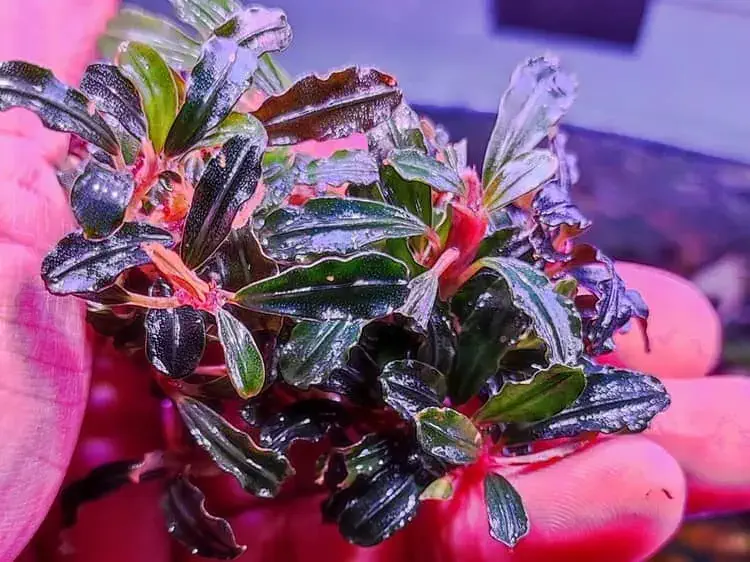
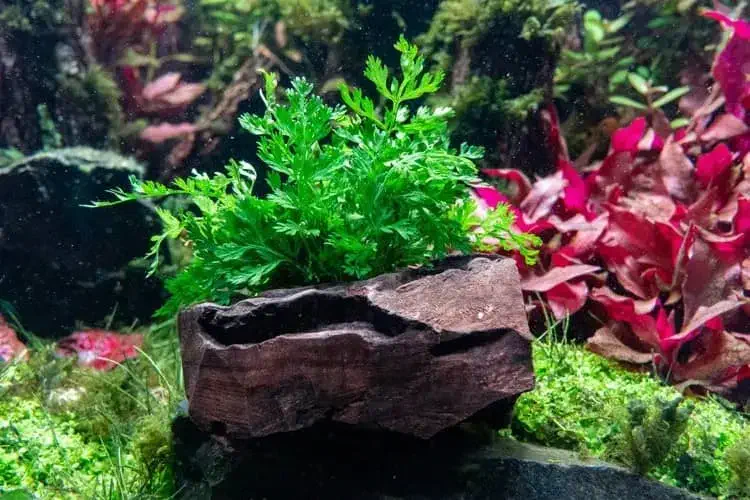
On the web, a lot of people buy these plants, especially Anubias and Bucephalandra, get a piece of hardscape, like driftwood, take aquarium-safe glue, lie Fevi Quick, and paste these plants onto the hardscape.
I have done that in one of my aquariums, and in a way, they look really nice.
The only drawback here is that the cost of these plants is a bit high. Maybe because they don’t grow as fast—that could be one of the reasons.
But still, they are some of the easiest plants you can buy today, add them to your tank, and maybe even fill up your tank with them to turn your aquarium into a planted aquarium.
6. Hygrophila Low-Tech Plants
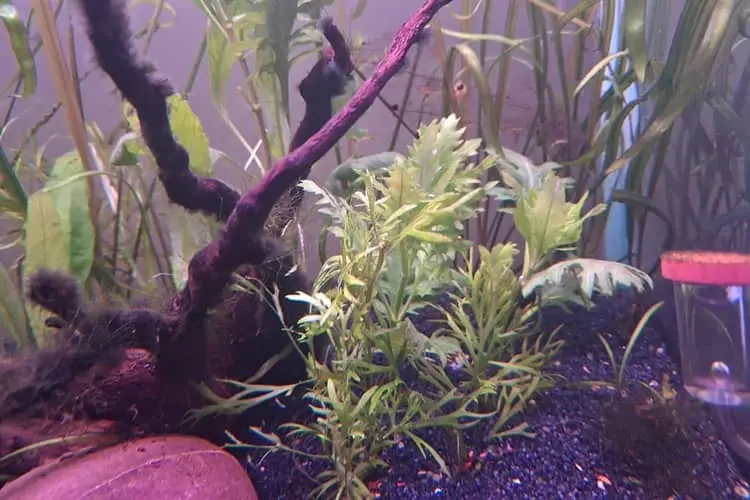
Now, Hygrophila is not just the name of one plant. It is a genus of various aquatic and semi-aquatic plants, many of which are found across India, Sri Lanka, and Southeast Asia.
Most of these plants are very hardy. They can handle temperatures from around 18 to 28 degrees Celsius, and you can grow them with or without soil. With proper temperature and light, somewhere between low to moderate, these plants can do very well in a low-tech aquarium.
The low-tech Hygrophila plants I recommend are:
- Hygrophila difformis / Water Wisteria
- Hygrophila polysperma
- Hygrophila polysperma variegated / Rosanervig
- Hygrophila corymbosa
Now, Hygrophila difformis, which is actually a plant native to India and is now being sold in almost every part of the world where people make planted aquariums, is a beautiful plant.
You can even grow it in your pots—the normal potted plants that you grow outside your lobby.
When you order this plant, it will usually come to you at around three to four inches in size. I personally cut off the leaves when I receive it, but I won’t suggest that you do the same because I have my own way of growing it. You can simply stick the plant into the substrate.
Again, you can grow it with or without soil. Give it medium light and maintain the temperature somewhere between 25 to 28 degrees Celsius.
Within 10 to 12 days, you will start seeing new leaves coming out, and you will be surprised because the submerged leaves will be much more beautiful than the leaves the plant originally came with.
And again, the same thing happens. Within around 30 to 45 days, the plant can easily double in size. Cut the top 70 percent, plant it next to the original plant, and you will have another Hygrophila difformis growing.
Just like Limnophila sessiliflora, order it once and enjoy it forever.
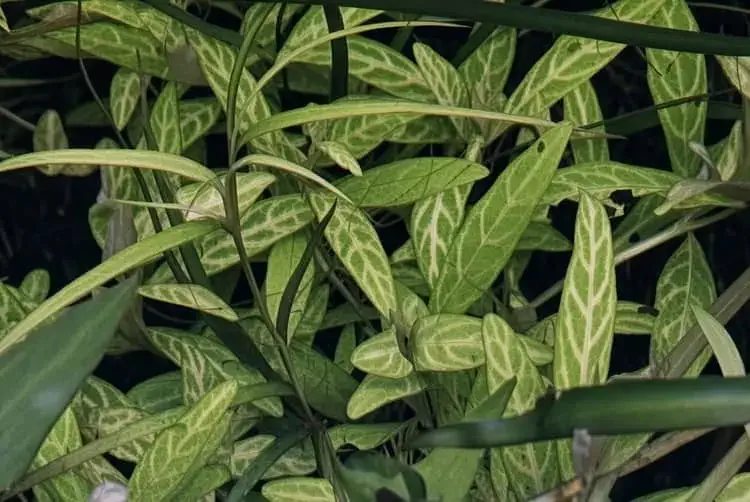
Out of these four, Hygrophila polysperma variegated / Rosanervig is one of my favorite plants. It can also grow up to around 5 to 10 inches, and it has these white nervies like design on its leaves. See the picture below of my 2 feet tank with this plant.
And Hygrophila corymbosa is something you can place in the midground, or even in the front of a big aquarium, because it doesn’t grow that tall. Instead, it becomes more bushy and gives you a nice, dense look.
7. Cryptocoryne Low-Tech Plants
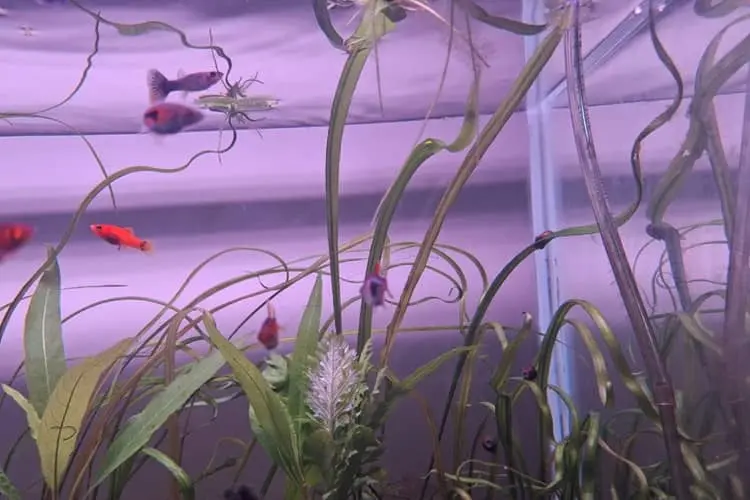
Now, similarly to Hygrophila, Cryptocoryne is again not just the name of one plant. It is a genus of various aquatic and semi-aquatic plants, again mostly found in India, Sri Lanka, and Southeast Asia.
They are also some of the best low-tech, low-maintenance aquarium plants, which can bring an amazing look to a planted aquarium.
Cryptocorynes are also rosette plants, like Vallisneria and Sagittaria.
You just need to bury them in the sand or aqua soil, or simply add them to your substrate. But don’t bury the whole plant. The crown should be just at the top of the substrate because if you bury it too deeply, it can melt.
Initially, you may see all the leaves of the Cryptocoryne plant melting. This happens because Cryptocoryne plants often come in their emersed form, and when you add them to your aquarium, they shed their old emersed leaves.
This is famously known as “crypt melt.”
But don’t worry. New leaves will start coming very soon.
The color and shape of the new submerged leaves can be quite different from the leaves of the plant you originally bought.
Now, there are also some high-tech Cryptocoryne plants, so here I am only talking about the low-tech Cryptocorynes that I personally recommend:
- Cryptocoryne wendtii Green
- Cryptocoryne wendtii Brown
- Cryptocoryne wendtii Tropica
- Cryptocoryne spiralis
- Cryptocoryne Retrospiralis
- Cryptocoryne spiralis Tiger
- Cryptocoryne parva
- Cryptocoryne Lucens
Among these plants, Cryptocoryne spiralis, Retrospiralis, and Tiger are taller plants. They can grow up to one to two feet in a long tank.
I have Cryptocoryne spiralis and Retrospiralis in my two-feet tank, and the thin leaves of these plants are easily two feet or more in length, as shown in the image above.
One more thing about Cryptocorynes: they handle temperature very well, from around 18 to 32 degrees Celsius.
However, they are what you would call heavy root feeders.
This means you need to have a good substrate and good soil because these plants consume a lot of nutrients and minerals from the substrate through their roots.
8. Ludwigia Low-Tech Plants
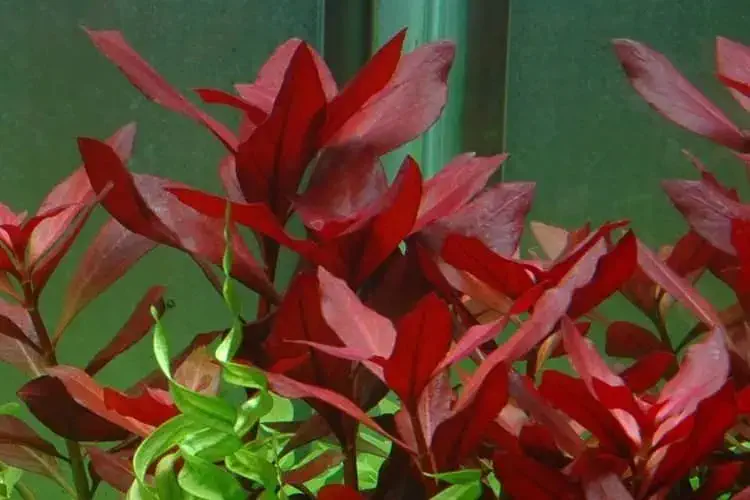
So, as the name suggests, Ludwigia is also a genus with lots of different plants, including some of the most beautiful high-tech and low-tech aquarium plants.
So Ludwigia is a stem plant. This means that for the plants I will be sharing below, you can simply order five pieces, and within a month or two, you can have ten or even more plants.
The best low-tech Ludwigia plants that I would suggest are:
- Ludwigia repens
- Ludwigia palustris
- Ludwigia palustris ‘Super Red’
There are a lot more Ludwigia varieties, but these are the ones I have personally grown. I used to grow them when I got started in the hobby, and they were growing really well.
The old leaves may melt after some time, but new growth keeps coming, often with beautiful colors.
Sometimes Ludwigia repens can have a mixture of dark and light green. Like I bought Ludwigia repens from ohmlet shoppe, where I received a slightly larger variety with lighter green leaves, and from Bunnycart, I get small dark green ones.
So, I think Ludwigia repens, although it is often sold simply under the name “Ludwigia repens,” can actually look quite different depending on the variety or source. You can have two or three different-looking forms of the plant in your tank.
The best position for Ludwigia repens is the midground or background, depending on how you trim it.
And then we have Ludwigia palustris or palustris’Super Red’. This is actually a reddish plant. It can give you a beautiful red shade if your aquarium has WRGB lighting, but even under normal aquarium lighting, it can develop some reddish or pinkish tint.
So, if you want to add a little bit of red to a low-tech aquarium, this is a good option.
The interesting thing is that it can still grow quite well in a low-tech setup, and in my experience, it can grow faster than Ludwigia repens.
9. Bacopa Low-Tech Plants
Now, Bacopa is not one of my favorite plants, just because of my personal choice. I don’t really like the plant.
But since I have to share with you 10 easy plants which have a 90 to 95 percent, or even 99 percent, chance of growing in your first planted tank, I present you Bacopa plants.
Here, there are two options:
- Bacopa caroliniana
- Bacopa monnieri
These two plants are very hardy, and with just low to moderate light, you can easily grow them.
They are stem plants, so again, get five stems and plant them in your tank. Within 15 to 30 days, they can grow to almost double their size. Cut around 70 percent from the top, replant the cuttings, and you will have more plants.
And about temperature, again, they are very hardy and can easily handle around 18 to 28 degrees Celsius.
Now, if I personally had to grow this plant, I would probably set up a five-foot planted tank with lots of different varieties of low-tech plants, and yes, at that stage I would grow Bacopa.
I have grown this plant in one of my two feet tanks in my office, though I have now sold that tank. So yes, it is a hardy plant. It is not one of the most beautiful looking plants, at least according to my personal taste, but it is still an extremely hardy plant, and you can grow it easily.
10. Elodea/ Brazilian Waterweed
Last on this list is a plant which, in many countries, is banned because it can grow so fast that if you take this plant and throw it into a river, a small lake, or any other natural body of water, and if the temperature is suitable, this plant can take over the entire water body.
It is being sold in India, and I don’t know how the government is allowing it. I personally think this can be a bad thing, but still, it is being sold.
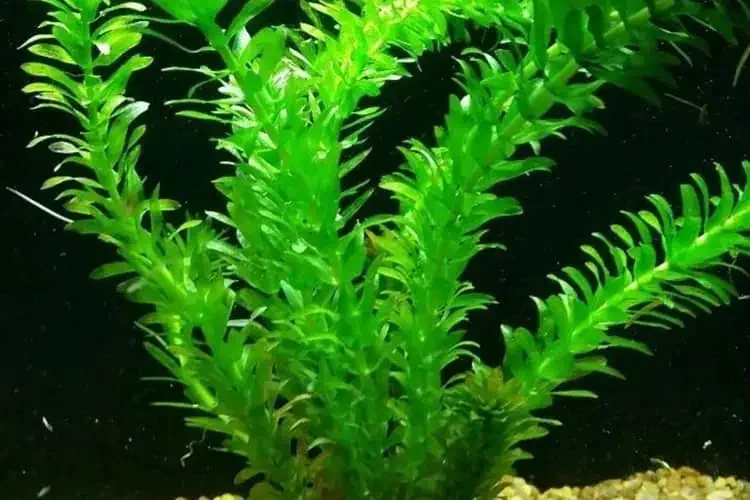
This is Elodea, also commonly known as Brazilian Waterweed, yeah its a weed.
Now, this is a plant which I personally use when I want to create a jungle. I basically just throw it into the water.
What will probably happen?
Let’s say I drop a 10 inch stem of it into the water. Within 10 days, I can see that the 10 inches have become almost 20 inches.
After another five days, that 20-inch plant may have reached the substrate, and roots can start growing into the substrate.
Give it another 10 days, and now I may have three stems coming from that substrate.
I mean, my God, this plant is so fast-growing that it is almost a weed. It will grow, definitely.
The only time I managed to destroy this plant was during the first year of my hobby, when I experienced my first summer with a planted aquarium. The plant completely melted.
Otherwise, my God, you can just throw it into a fish only tank and it will work almost like a natural filter, consuming nutrients from the water and providing cover for the fish.
But one important thing: never release Elodea or any aquarium plant into a natural water body. Keep it inside your aquarium and dispose of excess plants responsibly.
My Top 8 Favorite Medium-Tech Aquarium Plants
For a medium-tech plant, I will never suggest you have only a gravel or sand-only aquarium. You need some sort of soil.
I am not a big admirer of aqua soil, but you can definitely add it if you want.
Or, check out my blog on how to set up a planted tank & its cost, where I have shared my own formula for dirted soil—what type of soil I use, how cheap it is, and how you can maintain it for years.
So, to be very clear, the plants I am going to mention in the medium-tech category need at least dirted soil: soil capped with sand.
11. Rotala
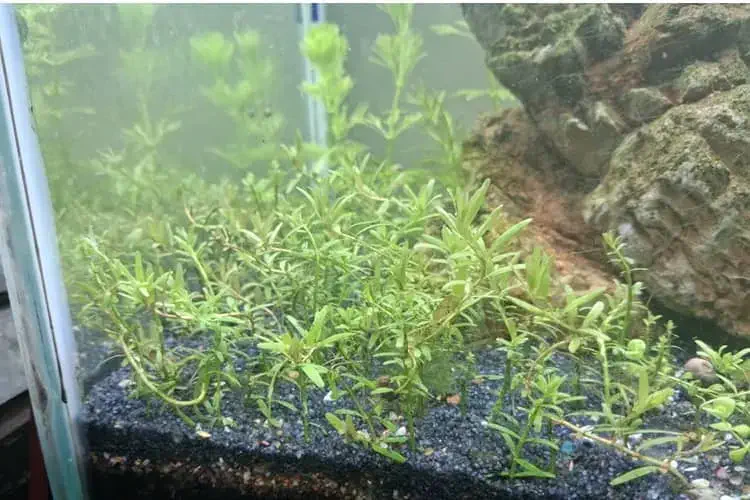
Now, Rotala is again a very beautiful and one of the most sold aquatic plants all over the world. Its origin is from India, Sri Lanka, Bangladesh, and nearby countries like Vietnam, Cambodia, and Thailand.
Some of the species even have names associated with these regions, like Rotala Assam and Rotala Bangladesh.
And not all Rotala plants are medium-tech. Some people call them low-tech, but no. I have grown them personally, and in my experience, they are medium-tech plants.
So, in this list of medium-tech plants, the first plant I am sharing is Rotala. Not all Rotala species, but the ones below:
- Rotala rotundifolia Green
- Rotala rotundifolia Red
- Rotala Green
- Rotala Orange Juice
- Rotala Assam
- Rotala Ceylon
My Experience Growing Rotala Without CO₂
These six Rotalas are plants I have personally tried and grown in a non-CO₂ tank.
During the early months of my hobby, I only used aquarium soil and medium light, and these plants were growing quite well.
About the light, I will give you one suggestion.
Yes, cheaper aquarium lights like SOBO AL COB, Blue Pet are available at a very reasonable price.
For a two feet tank, you can get a light for somewhere around ₹ 800 to ₹ 1,000, and yes, plants will grow.
But if you invest a little bit more, I am not telling you to go for lights like Chihiros or Twinstar. I am just suggesting one Indian company of lights, or something similar, and you will have amazing growth in medium-tech plants.
My first WRGB light was the FireGlow 50W WRGB.
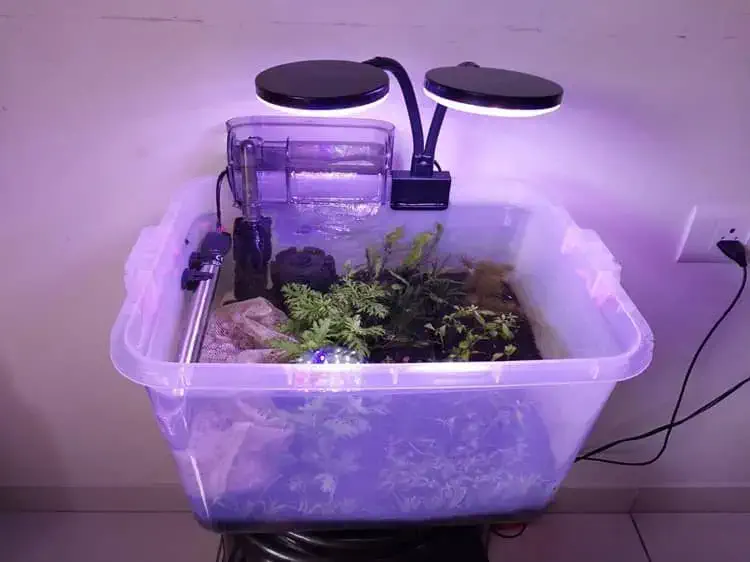
Now, it is a fixed light. A lot of fancy aquarium lights have the option to change the color. For example, I have one with an Azure Aura setting in my two feet tank, but the FireGlow doesn’t have that option.
For any tank from one and a half feet to two and a half feet, this 50W light is amazing.
It will be considered moderate light in a two-and-a-half-feet tank and high light in a one-and-a-half- or two-feet tank.
So, if you are planning to grow medium-tech plants like these Rotalas, I would suggest trying this type of light.
12. Myriophyllum Plants
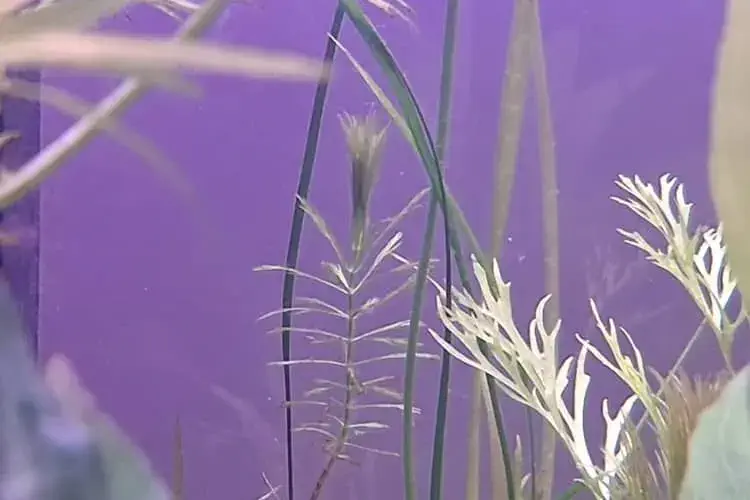
Myriophyllum is a semi-aquatic plant. Semi-aquatic means that a lot of people grow these plants in their pots too, but not in direct sunlight.
And when they are added to a tank with good substrate, they look simply amazing.
Most of these Myriophyllum plants are considered easy, and with moderate light, they will grow amazingly well.
Some of the Myriophyllum plants that you can consider are:
- Myriophyllum aquaticum / Parrot Feather
- Myriophyllum mattogrossense
I personally use Myriophyllum aquaticum, which is also known as Parrot Feather, because again, it is a very fast-growing plant.
But do remember, it is not a very heat-tolerant plant. If your aquarium temperature is between 20 to 28 degrees Celsius, it will be just fine, but above 30 degrees Celsius, it can start melting.
I personally use this plant because a lot of times I get bored with Rotala wallichii, so I add Myriophyllum aquaticum to my tank to see something new.
The fine, needle-like leaves give the plant a completely different texture, and with a little bit of water flow, it looks simply amazing.
There are a few more Myriophyllum plants which I will add to the high-tech section, especially Myriophyllum tuberculatum, also known as Red Water Milfoil. This is a very beautiful red plant, but it needs better lighting and CO₂ to show its best colors and growth.
13. Pogostemon stellatus ‘Octopus’
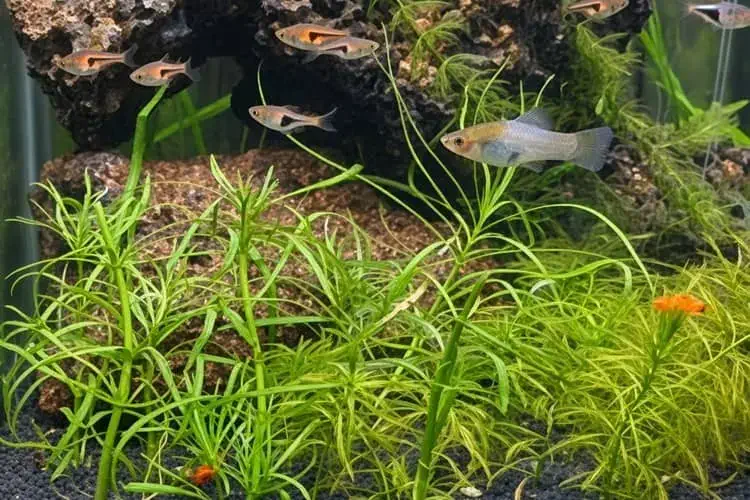
Now, Pogostemon has quite a few varieties. I think in total I have used around four to five. But in medium-tech, I would suggest only one plant: Pogostemon stellatus ‘Octopus’.
I could have added this plant in low-tech section, but I personally believe a lot of people in low-tech tanks grow plants without soil and with low light. That’s why I am not adding it there.
This plant grows like a single, thick stem, and from the right and left, long, needle-sized leaves of almost 4 to 5 inches grow outwards, giving it an octopus-like appearance
As I told you, the name “Octopus” probably comes from the way its leaves grow.
I would suggest that, along with plants like Vallisneria and Limnophila sessiliflora, this plant has the potential to grow as tall as you want.
I mean, if you set up an aquarium which is 2 to 3 feet in height, this plant can give you a 3-foot stem.
The only drawback here is that if you want a bushy tank, this might not be the best plant because, as I told you, the leaves are quite limited on this plant.
You can literally count them. It is not like Limnophila, where one stem has thousands of tiny, feather-like leaves.
But for a big tank, where you want something that can easily grow tall and cover the background, this is your plant.
14. Aponogeton crispus
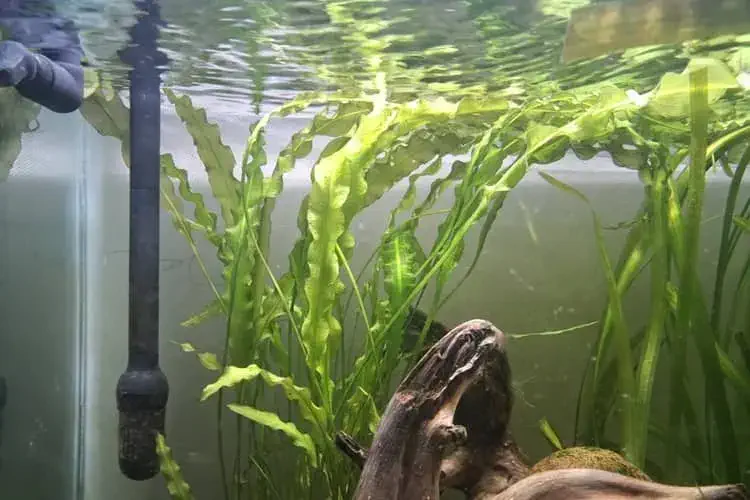
Now, Aponogeton crispus is a new plant for me because I just planted it one month back.
Why? Because I was bored with Vallisneria, and I wanted to get a plant which can do the same thing—grow very long leaves.
Vallisneria, if I leave the tank without any maintenance, can just take over the whole tank. But Aponogeton crispus doesn’t do that.
So, Aponogeton crispus is a bulb plant. When I ordered it, it came with a few leaves, and at the bottom, the crown was like a bulb. I just planted it on the left-hand side of my two and a half feet tank.
Some leaves melted because of transportation, and they were very small. But under a month, the total number of leaves tripled.
And yes, this is a CO₂ tank, but even in a non-CO₂ tank, this plant can do very well.
The leaf has this beautiful curl in it, and it is growing very, very tall. I mean, the longest leaf of my Aponogeton crispus I have right now is easily two and a half feet long.
So, the texture of this plant is amazing. The curling, the curl in the plant leaf, is amazing.
And in the future, I want to start a five-feet planted tank. So, I am pretty much sure that one-third of the background plants will be Aponogeton crispus.
I will set up a filter or wave maker on the left-hand side so that all these plants have this amazing flow of leaves going towards the right-hand side.
Very beautiful plant.
One thing which I came to know about this plant is that when you grow it, it will not create a new plant very quickly.
I personally think and I have not tested it yet—that a new plant will eventually come out of it and float in the water because, in nature, bulb plants do this thing. They create a new plant, which can float in the water, and later it gets stuck somewhere, develops roots into the substrate, and starts growing.
So, I am still waiting for that.
15. Heteranthera zosterifolia / Star Grass
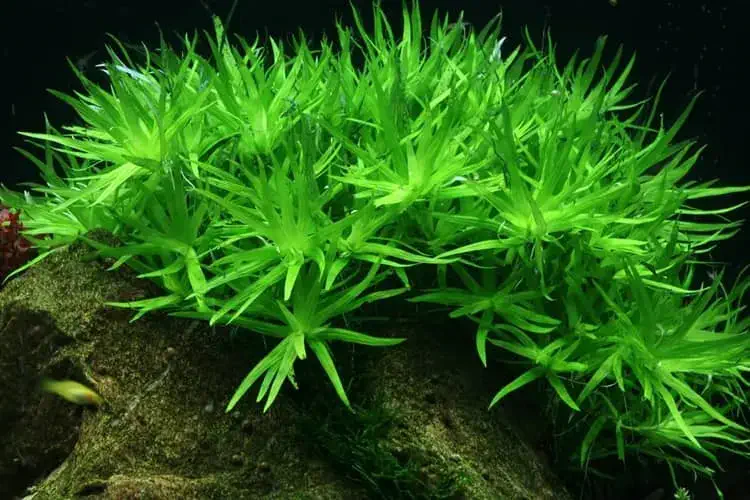
Star Grass is an amazing plant, which I saw for the first time on YouTube when somebody had created a whole tank using this plant.
He had this plant in the background, midground, and even in the front, and the entire aquarium looked amazing.
It doesn’t grow very fast like other plants shared above, but still, it is a very beautiful plant.
The leaves come out from every node on all sides, giving the plant a beautiful star-like appearance. That is where the name Star Grass comes from.
The only drawback of this plant is that it requires a bit of extra light. It can grow without CO₂—I have personally tried it—but your light needs to be at least moderate, if not high.
So, if you have a good substrate and moderate light, you can grow Heteranthera zosterifolia without CO₂, although adding CO₂ will definitely improve its growth.
16. Ludwigia Medium-Tech Plants
So I have already shared two easy plants of Ludwigia. Let me share a few medium-tech plants from Ludwigia.
These are:
- Ludwigia arcuata
- Ludwigia sp. “Mini Super Red”
- Ludwigia ovalis
- Ludwigia senegalensis
- Limnophila sp. “Rugosa”
- Limnophila sp. “Slender”
- Limnophila “Vietnam”
Out of these, I have tried Ludwigia sp. “Mini Super Red”. I have grown it without CO₂ and aquarium soil. I grew it in a dirted tank.
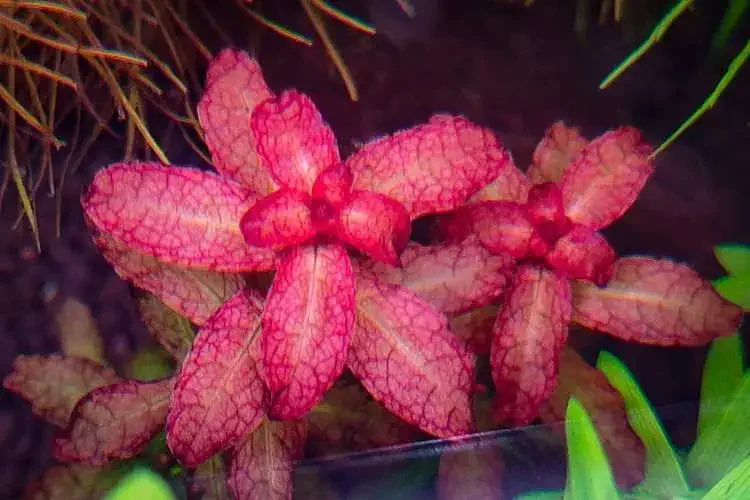
And Ludwigia senegalensis is also a very beautiful plant because it has those veins coming out of its leaves.
Ludwigia ovalis is a very unique plant, very thick and slow-growing, even with CO₂, but still, it will grow.
And Ludwigia “Vietnam” is something which I have to try in the future because it’s completely medium as per the details. And it gets a shape like a big-sized Rotala rotundifolia Green.
So, this is not the complete list of Ludwigia. There are also tough plants and very red plants available in Ludwigia species, but that will come later in the high-tech plants.
17. Limnophila aromatica Plants
Now, Limnophila Sessiliflora is one of the easiest plants to grow, but it’s not the only plant from this genus.
There are lots of other Limnophila plants, which I will later share in the high-tech section also.
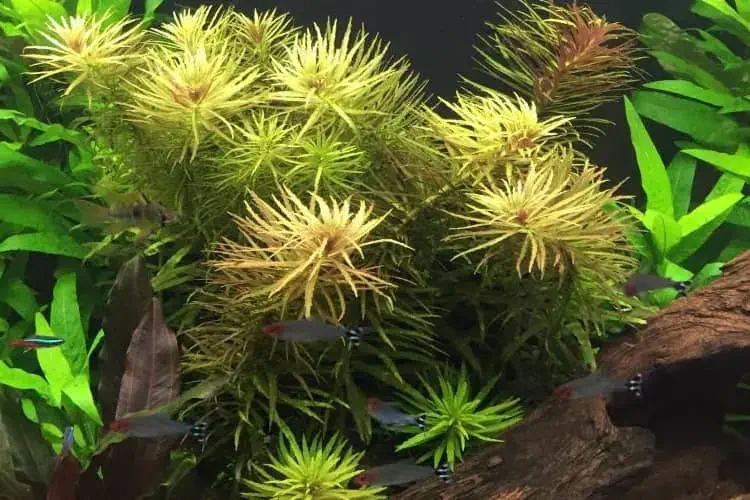
But in medium-tech, I will suggest three plants from Limnophila aromatica. Actually, they are the same plant, but they have just different colors and forms. These are:
- Limnophila aromatica
- Limnophila aromatica Mini
- Limnophila aromatica Green
Their shade in normal light will be more on the greenish and bronze side, but if you get a WRGB light, you will definitely get reddish to pinkish colors.
Although Limnophila aromatica Green doesn’t need WRGB light, its not a fast growing one, but the leaves from the top look like a star, which gives it a very unique appearance.
18. Echinodorus Plants
Now I have shared the last medium-tech plant in this list, which I believe I have just added to the medium-tech category because, in low-tech, I am sharing plants that can also grow without soil.
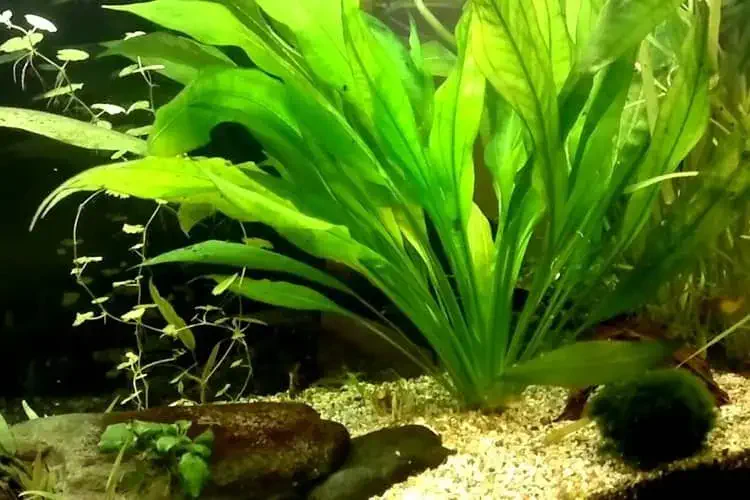
But if you have a good substrate, especially dirted substrate, and you buy any of the plants which I have shared from the Echinodorus family, they will definitely grow.
The temperature tolerance of these plants is amazing. I have seen people growing them in ponds where the water temperature is touching 32 to 35 degrees Celsius. They can even handle cold temperatures, something like 18 to 20 degrees Celsius.
And their leaves can grow quite large. For some plants, they can be 3 to 4 inches, while for others, the sky is the limit.
I have personally used 3 to 4 varieties of them, and you can add these plants as centerpiece plants because they can grow so big that you can just place one in the center of your tank, with different small and medium-sized plants on the sides.
So, here is the list:
- Echinodorus major
- Echinodorus Red Rubin — a really beautiful red plant
- Echinodorus Rose — another red plant
- Echinodorus argentinensis
- Echinodorus Marble Queen
- Echinodorus Ozelot
- Echinodorus tenellus — a carpet plant
- Echinodorus Big Bear
- Echinodorus parviflorus
- Echinodorus Fancy Curl
- Echinodorus N’Rose
- And many more
And now my Top 10 Favorite High-Tech Aquarium Plants
Why Are These Plants Called “High-Tech”?
Before I share my list of high-tech aquarium plants, let me first explain why they are called high-tech plants.
Many aquatic plants naturally grow in freshwater environments where CO₂ can be readily available.
In a planted aquarium, it is difficult to maintain the same level available CO₂ that plants may get in nature.
This is where the difference between low-tech, medium-tech, and high-tech plants becomes important.
Low-tech plants are generally quite forgiving and can grow without injected CO₂. Medium-tech plants can also grow without CO₂, but they may grow more slowly and may not develop the same density, shape, or natural coloration that they can achieve when CO₂ is available.
High-tech plants are different. While some of them may survive without injected CO₂, in my experience, their growth can be very weak. They are also much less forgiving of fluctuations in temperature, pH, light, and other aquarium conditions. Under such conditions, some of these plants may melt.
That is why I would not recommend high-tech plants to a complete beginner.
If you are new to planted aquariums, I would suggest starting with low-tech plants first. Once you are comfortable maintaining your aquarium, you can move on to medium-tech plants. And when you are finally ready to install and properly manage a CO₂ system, you can start exploring high-tech plants.
So, with that explanation out of the way, let’s get started with my list of high-tech aquarium plants.
19. Monte Carlo
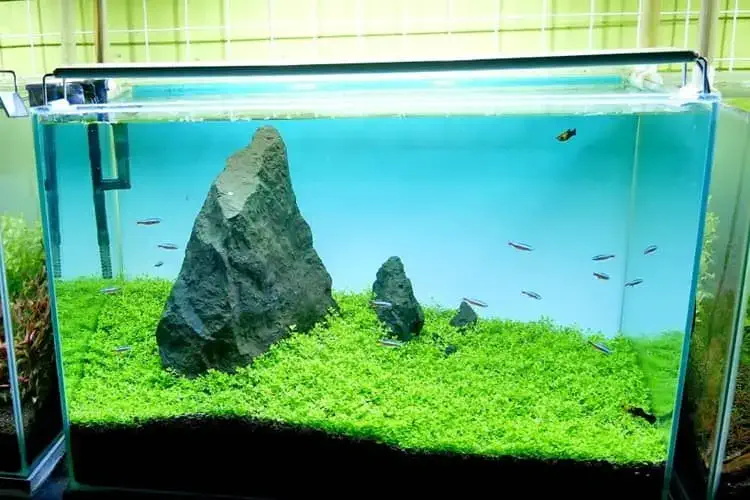
Monte Carlo is one of the most popular carpeting plants in the planted aquarium hobby. And believe me, people buy it in bulk—and most of the times, end up melting it in bulk as well!
Monte Carlo is a very small carpeting stem plant. It can be grown in a medium-tech aquarium, but without strong light and sufficient CO₂, it tends to grow upward rather than spread horizontally.
You may get healthy growth, but you are unlikely to get that beautiful, dense carpet that Monte Carlo is famous for.
This is where a high-tech aquarium makes a big difference.
For the best results, plant Monte Carlo in a good-quality aquasoil and, if possible, use powder-type aquasoil. Powder soil like own from Tropica, has much smaller granules, which makes it easy for the tiny stems & roots of Monte Carlo to establish themselves.
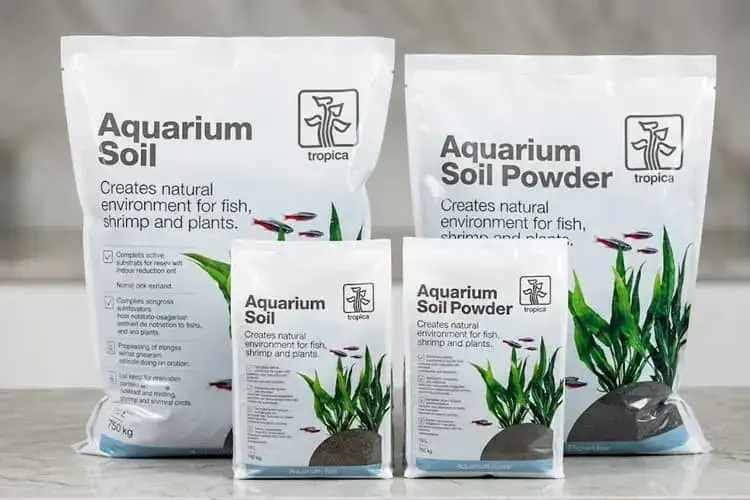
You also need strong lighting and injected CO₂.
With enough light, instead of growing primarily upward, the new growth starts spreading horizontally along the substrate. As the horizontal stems continue to grow, they produce new shoots and roots that establish themselves in the aquasoil. Over time, these shoots spread further and further.
Under good high-tech conditions, Monte Carlo can develop into a beautiful, dense carpet within a few months.
So, can you grow Monte Carlo in a medium-tech aquarium?
Yes, you can try. It may grow, although it is likely to become taller and less compact.
What about a low-tech aquarium?
I would not recommend it. In my experience, getting a proper Monte Carlo carpet without sufficient CO₂ and light is extremely difficult.
20. Glossostigma & HC Cuba
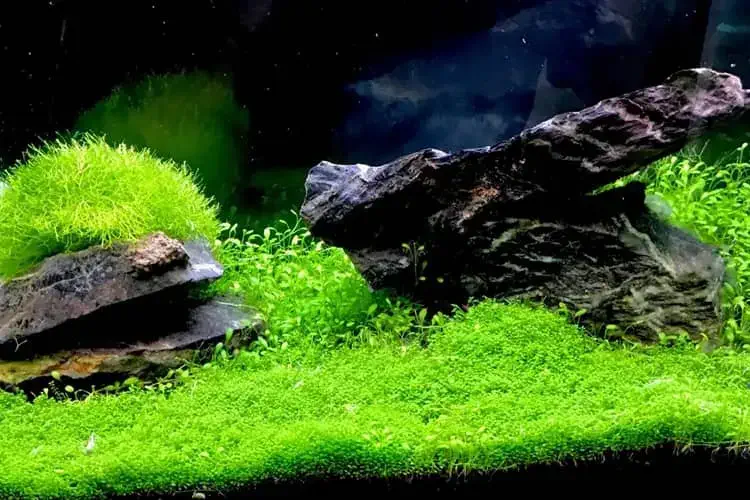
Now I’m going to cover two plants that belong to different species, but I’m putting them together because, after Monte Carlo, Glossostigma and HC Cuba are among the most popular carpeting plants in the planted aquarium hobby.
Unlike Monte Carlo, which can sometimes be grown successfully in a medium-tech setup, I would consider HC Cuba and Glossostigma high-tech plants. Both perform much better with injected CO₂, strong lighting, and good nutrition.
HC Cuba, also known as Baby Tears, is a very small and delicate carpeting stem plant. It needs fairly demanding conditions if you want it to form a proper carpet.
For the best results, I recommend:
- Powder-type aquasoil, which makes it easier for this tiny plant to establish itself.
- Strong lighting to encourage compact, horizontal growth.
- Injected CO₂, which is extremely important for strong and consistent growth.
- Good fertilization, including adequate nutrients in the water column.
If you provide these conditions, HC Cuba can form a beautiful, dense carpet. But if you simply buy it and put it into a low-tech aquarium, there is a very good chance that you will watch it gradually melt away.
Glossostigma is another extremely popular carpeting plant. Its leaves are noticeably larger than those of Monte Carlo and HC Cuba, giving the carpet a slightly different appearance.
Interestingly, people sometimes manage to grow Glossostigma without injected CO₂. But there is a big difference between surviving and growing properly. Without CO₂, it can become weak and eventually melt.
With strong light, good nutrition, and injected CO₂, however, Glossostigma can spread horizontally across the substrate and create a beautiful carpet.
21. Rotala H’ra
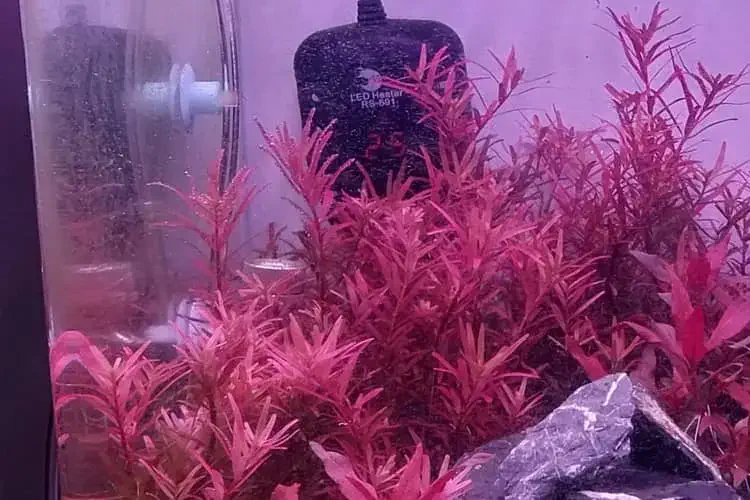
If you look at the lists of major aquascapers who work with high-tech aquariums, Rotala H’ra will almost always be somewhere on the list.
I have successfully grown this plant myself. I received around 10 submerged-grown stems from a friend in Kolkata, and I planted them in my first CO₂ aquarium. And believe me, the plant went crazy! I got so much growth that, for a while, my aquarium looked absolutely amazing.
Rotala H’ra is a beautiful red stem plant with relatively long, narrow leaves growing from the stems. It doesn’t form an extremely dense bush on its own, but when you use it as a background plant—especially against a white, bluish, or sky-blue background—it can be absolutely stunning. It is one of those plants that can make people stop and stare at the aquarium.
In fact, many aquascapers create entire backgrounds using nothing but Rotala H’ra. It works particularly well in smaller aquariums of around 1.5 to 2 feet, where a large group of these red stems can completely transform the look of the tank.
The good news is that, despite being a high-tech plant, it isn’t difficult if you provide the right conditions. Give it moderate to high light, a RGB light, along with injected CO₂ and regular liquid fertilization.
But there is one more thing I learned the hard way: don’t overload your aquarium with fish if you want the best growth and coloration from Rotala H’ra.
When I had a higher fish load, I noticed that the new leaves growing from the stems became dramatically smaller—almost one-third the size of the leaves I was getting previously. That was one of the reasons I eventually removed the plant from that aquarium.
Now I’m growing it again with a much lower fish stock.
A commonly followed guideline among aquascapers is to keep nitrate relatively low—around or below 20 ppm—to encourage healthy red coloration.
So, how do you keep nitrate under control?
More regular water changes, fewer fish, and controlled feeding can all help. Personally, if your aquarium is lightly stocked, I would also avoid overfeeding and keep feeding conservative.
Get these things right, and Rotala H’ra can be an incredibly rewarding plant.
22. High-Tech Rotala Plants
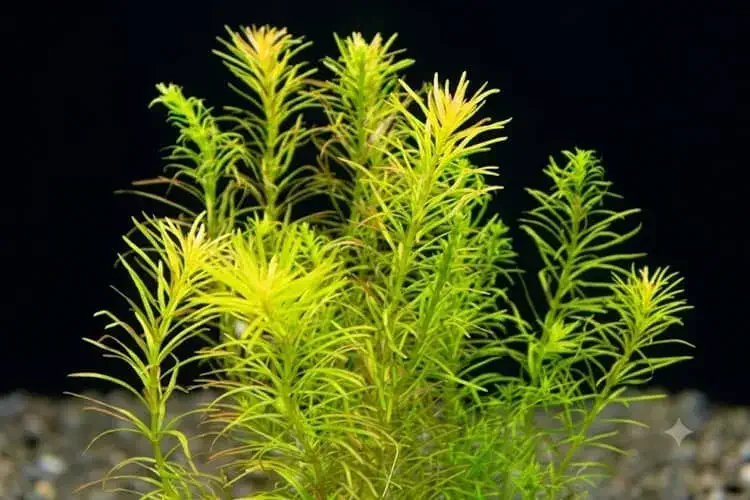
I have already shared several Rotala varieties in the medium-tech section, and I have kept Rotala H’ra separately because, in my opinion, it is such an amazing plant that it deserves its own mention.
Now, here is a list of some other Rotala varieties that you can try in a high-tech aquarium with CO₂:
- Rotala wallichii
- Rotala nanjenshan
- Rotala macrandra
- Rotala Blood Red SG
- Rotala Orange Juice
- Rotala Vietnam
- Rotala Ceylon / Sri Lanka
The good thing about many of these Rotala varieties is that you don’t necessarily need aquasoil to grow them. A dirted tank can work perfectly well, provided you have the right light, CO₂ & Liquid Fertilizer,.
In terms of coloration, don’t expect every Rotala on this list to become deep red. Rotala macrandra and Blood Red SG are among the varieties known for stronger red coloration, while several of the others can produce green, orange, pink, or reddish-pink shades, depending on the conditions.
Among these, I would consider Rotala wallichii and Rotala Ceylon relatively easier choices for a high-tech aquarium. R. macrandra, on the other hand, can be considerably more demanding.
And unlike Rotala H’ra, I wouldn’t say that you specifically need to maintain nitrate below 20 ppm for these plants. Good nutrition and stable aquarium conditions are more important than chasing one particular nitrate number.
23. Pogostemon Helferi and Other Pogostemon High-Tech Plants
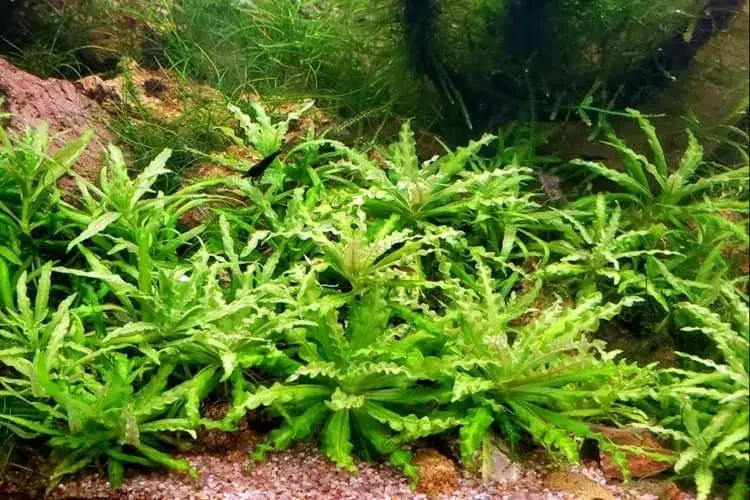
I’ve already shared one Pogostemon plant in the medium-tech section, which is Pogostemon Octopus. Now I’m going to share the main Pogostemon plant that I want to recommend for a high-tech aquarium: Pogostemon helferi.
Pogostemon helferi is a beautiful carpeting and foreground plant, although it doesn’t spread very quickly. When you buy it, you may get a small plant that is only around one inch in diameter. But give it time and, within roughly one to three months, it can grow into a much larger clump of around three inches in diameter.
It is definitely a slow-growing plant, but when it establishes properly, it looks simply stunning.
Apart from Helferi, there are other Pogostemon species and related varieties, such as Pogostemon dassen purple, Pogostemon Erectus which are mainly grown as stem plants. Depending on the variety and conditions, they can have greenish or slightly pinkish tones as per your Aquarium light.
I particularly like these slower-growing Pogostemon plants for small aquariums or tanks with limited height. They don’t shoot up very quickly, and many varieties stay around five to six inches tall, making them easier to manage in shorter tanks.
24. Ludwigia Inclinata Meta and Other Ludwigia High-Tech Plants
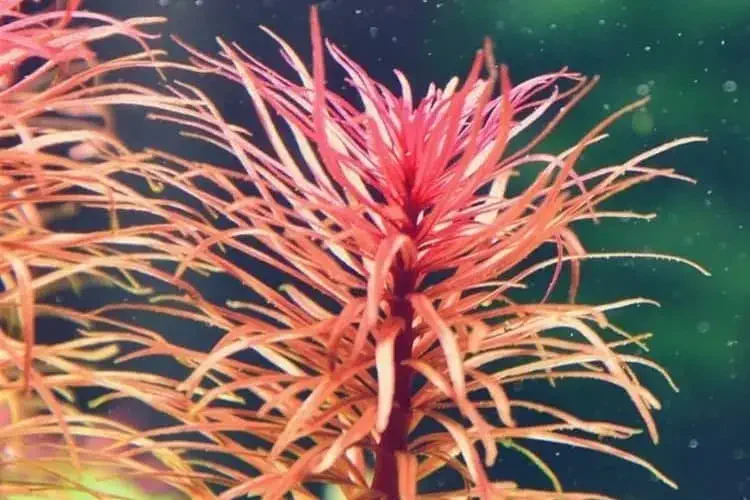
Now let’s move on to Ludwigia.
Here I’m sharing some of the really high-tech Ludwigia plants that I have personally tried, and for me, some of them are even more difficult to grow than Rotala H’ra.
One of my favorite Ludwigia plants is Ludwigia inclinata ‘Meta’.
There is also Ludwigia inclinata ‘Cuba’, which is a different and equally interesting variety.
Ludwigia inclinata ‘Meta’ is a beautiful stem plant with soft, elongated leaves. The leaves are noticeably larger than those of most Rotala varieties—roughly around half an inch or more—and the plant can grow surprisingly fast when it is happy.
Under a good WRGB light, especially with strong CO₂ and proper fertilization, you can get a beautiful combination of reddish and pinkish coloration.
However, I have found Ludwigia inclinata ‘Meta’ to be quite unpredictable.
When I get healthy submerged-grown plants from someone who is already successfully growing them in their aquarium, they usually establish very well for me. But when I order the same plant from online vendors, I have often seen a different result: the plant starts growing, but eventually melts.
I’m not completely sure why this happens. It could be related to the transition from one aquarium’s conditions to another, differences in water parameters, or simply the difficulty of converting commercially grown plants to submerged growth.
Based on my own experience, I would actually suggest trying it in a one-foot cube aquarium rather than immediately putting it into a two- or two-and-a-half-foot tank. I had much better results growing it in a one-foot cube with CO₂.
Apart from Meta, there are several other demanding Ludwigia varieties that you can explore in a high-tech aquarium:
- Ludwigia inclinata ‘Cuba’
- Ludwigia White
- Ludwigia glandulosa perennis
- Ludwigia brevipes
- Ludwigia atlantis dark orange
25: Tonina fluviatilis
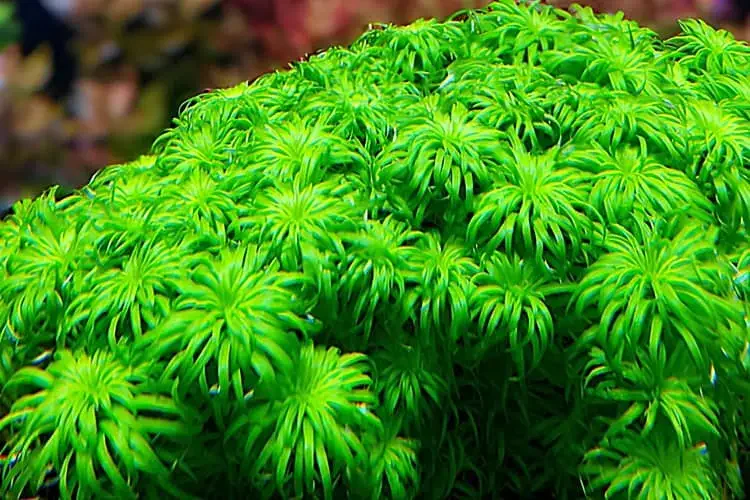
Now, this is a super-demanding plant. I tried growing it, failed, and I definitely want to try it again.
Tonina fluviatilis is a stem plant and is not a very fast grower. The most interesting thing about this plant is its appearance from above. When you look at it from the top of the aquarium, the upper part of the stems has an almost umbrella-like appearance, with relatively broad leaves.
The biggest challenge is its water requirements. I had CO₂ and substrate, and it can apparently grow even in a dirty tank with Aquasoil, but it really prefers soft, acidic water with a pH around 6.0–6.5.
In my tank, after I planted the cuttings, I did get new growth, so the plant was definitely trying to grow. But at the same time, the older, lower growth was melting very quickly, because my tank PH is 7.2, I check via API liquid test kit.
Now, I am planning to set up a low-pH tank specifically so I can try Tonina fluviatilis again.
So, if you have Aquasoil and can maintain a pH of around 6.5 or lower, this is definitely a plant worth trying. It is very, very rewarding when it grows well, and I would say it is one of the most unique-looking aquarium plants you can keep.
Ah yes — you meant Eleocharis parvula, commonly called Dwarf Hairgrass, not HC Cuba. My mistake.
26: Eleocharis parvula — Dwarf Hairgrass
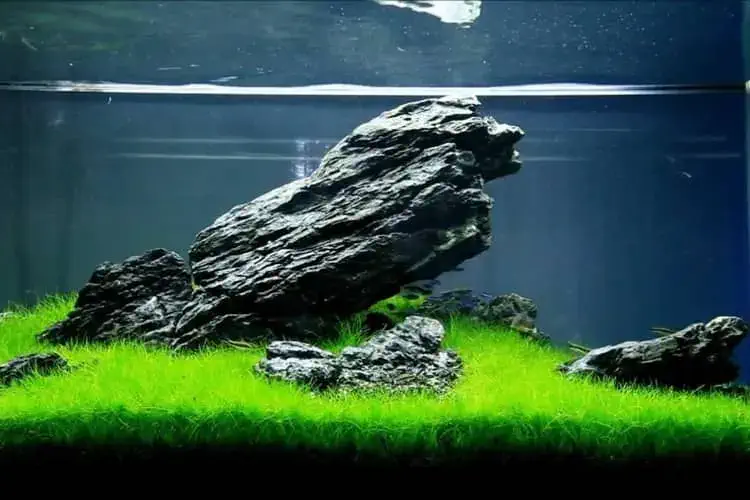
Now, Eleocharis parvula, commonly known as Dwarf Hairgrass, is another very popular carpet plant. People often say, “You can grow it without CO₂,” and technically, yes, you can. But if you want a proper, dense carpet, CO₂ makes a huge difference.
Without CO₂, it can grow, but you need a lot of patience—sometimes six months to a year to get a really good carpet. With CO₂ and moderate to high light, it becomes much faster and more rewarding.
The good thing is that it can tolerate a wide range of pH, so you don’t need to maintain a very specific pH for this plant.
When you order it, it will often arrive as emersed-grown grass. So the old leaves will melt , and then fresh submerged growth starts coming out.
If you have CO₂ and moderate to high light, it can even work in a relatively dirty tank. But Aquasoil is definitely better, because Dwarf Hairgrass has a relatively small root system.
Once established, Eleocharis parvula can create a beautiful, natural-looking grass carpet, and I think it’s one of the most rewarding carpeting plants for a planted aquarium.
27: Alternanthera — High-Tech Plants
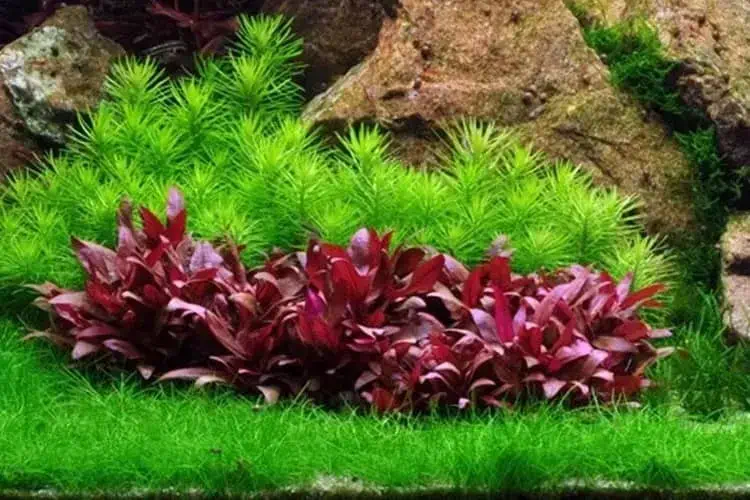
Now, Alternanthera is a genus of aquarium plants with more than a dozen varieties.
Some of the most common ones are
- Alternanthera reineckii
- Alternanthera reineckii ‘Mini
- Alternanthera reineckii ‘Rosanervig’.
- And few more
Most of these stem plants have relatively large leaves and need good-quality WRGB lighting to develop their beautiful red coloration.
Some varieties stay quite small, like Alternanthera reineckii ‘Mini’, while others can grow considerably taller.
Personally, I prefer the medium-sized varieties in the foreground to midground, where their red colour really stands out.
I wouldn’t call Alternanthera a super-tough plant, but it is definitely more demanding than most beginner plants. If you try to grow it without nutrient-rich Aquasoil and without CO₂, you may struggle to keep it healthy, and in many cases, the plant can start melting away.
So, if you want those deep red leaves and compact growth, give it strong WRGB light, CO₂ and a good nutrient-rich substrate.
28: Cryptocoryne Pink Panther
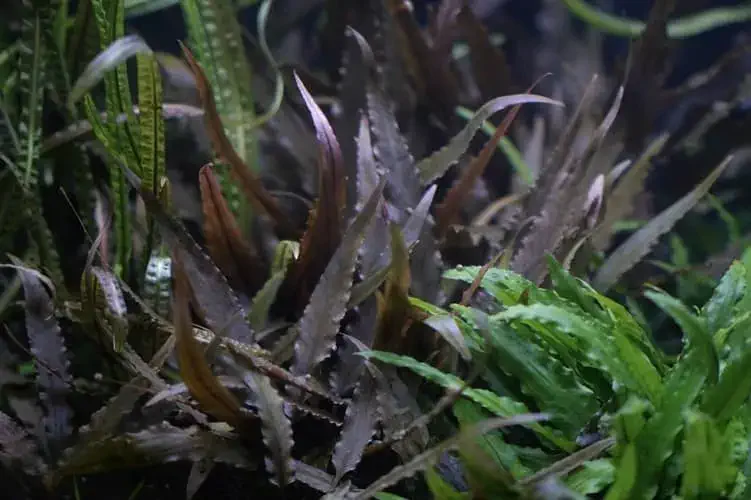
Normally, most Cryptocoryne plants are considered easy to medium-tech plants, but this one is an exception.
First of all, Cryptocoryne Pink Panther can be quite expensive.
Some hobbyists may sell it for around ₹300–₹400, while online prices can go as high as ₹750–₹1,000 per plant. So, it is definitely not a cheap Crypt to experiment with.
The most attractive thing about Pink Panther is its silvery-white or pinkish-white coloration. The shades are very unusual compared with the typical green or brown Cryptocorynes.
But this plant requires something even more important than CO₂ — stable water parameters. If your water parameters keep changing, your pH goes up and down, or your temperature fluctuates rapidly, the plant can simply melt away.
And because you are paying a relatively high price for a single plant, that makes it a bit risky for beginners.
Personally, I am still considering buying one. After around two years in this hobby, I now understand how to maintain my aquarium at around 25–28°C throughout the year, with relatively stable conditions.
So, if you can maintain stable temperature and water parameters, I would definitely recommend trying this plant. I would place it toward the centre or midground as a centerpiece plant, because its unusual colour can really stand out.
Just look at those silvery, pinkish-white shades—it can be an absolutely amazing addition to a planted aquarium.